The diamond industry is experiencing its most significant transformation since De Beers convinced the world that “a diamond is forever” in 1947. Today’s consumers aren’t just asking whether a stone sparkles—they’re questioning where it came from, how it was made, and what values it represents. The answer increasingly lies not in ancient mines, but in cutting-edge laboratories where science meets artistry.
This shift reflects a broader evolution in how we define luxury itself. The traditional markers of exclusivity—rarity, cost, and heritage—are being challenged by a new set of values: transparency, sustainability, and innovation. For a generation that grew up with climate consciousness and ethical consumption, the ultimate luxury isn’t what’s most expensive or exclusive, but what aligns with their principles without compromising on beauty or quality.
The New Luxury Consumer: Values Over Vanity
Today’s luxury consumer operates by different rules. They’re informed, connected, and unimpressed by marketing mystique that can’t withstand scrutiny. When Meghan Markle chose lab-grown diamond earrings for a royal engagement, or when Leonardo DiCaprio invested in Diamond Foundry, they weren’t making fashion statements—they were making values statements.
This demographic, primarily millennials and Gen Z, represents the future of luxury consumption. They’re willing to pay premium prices, but they want transparency in return. They seek beauty that doesn’t come with a moral compromise, craftsmanship that doesn’t exploit, and innovation that points toward a better future rather than clinging to problematic traditions.
The jewelry industry has been slower to adapt than fashion, but the tide is turning. Independent designers and established houses alike are recognizing that sustainability isn’t just a trend—it’s a fundamental shift in how luxury operates.
Lab-Grown Diamonds: The Technical Revolution
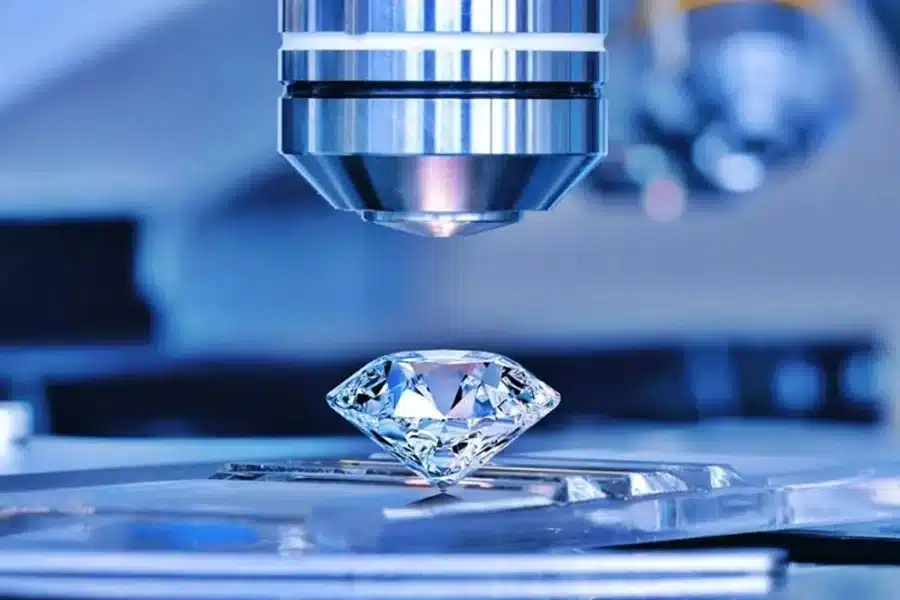
The science behind lab-grown diamonds reads like something from a sci-fi novel, yet the results are remarkably traditional in their beauty. Using either High Pressure High Temperature (HPHT) or Chemical Vapor Deposition (CVD) methods, laboratories can now replicate the exact conditions that create diamonds naturally—but in weeks rather than millennia.
What emerges from this next-generation diamond craftsmanship is chemically, physically, and optically identical to mined diamonds. The Federal Trade Commission has confirmed this, dropping the word “natural” from its definition of diamonds in 2018. Even trained gemologists require specialized equipment to distinguish between lab-grown and mined stones.
The environmental impact comparison is stark. Traditional diamond mining can disturb 250 tons of earth for a single carat, while lab-grown alternatives require a fraction of that environmental footprint. For water-conscious consumers, the difference is even more dramatic—lab-grown diamonds use significantly less water per carat than their mined counterparts.
Perhaps most importantly for designers, lab-grown diamonds offer creative freedom that mining cannot match. Want a specific size, cut, or color? Laboratory conditions can be controlled to produce exactly what a design requires, rather than working around what the earth happened to provide.
Celebrity Endorsements and Brand Adoption
The celebrity embrace of lab-grown diamonds has been both subtle and significant. Emma Watson, long an advocate for sustainable fashion, has been photographed wearing lab-grown pieces. Billy Porter made headlines at the 2019 Golden Globes with lab-grown diamond jewelry that perfectly complemented his boundary-pushing style choices.
Fashion houses are taking notice. Pandora announced in 2021 that it would phase out mined diamonds entirely, focusing exclusively on lab-grown alternatives. Smaller, design-focused brands have been even quicker to adapt, seeing lab-grown diamonds as perfectly aligned with their values and aesthetic vision.
This isn’t about rejecting tradition—it’s about evolving it. As one jewelry designer recently noted, “The romance isn’t in how a diamond was formed. It’s in what it represents in someone’s life.” Lab-grown diamonds carry the same emotional weight while removing the ethical concerns that increasingly trouble conscious consumers.
A Case Study in Innovation
Companies like Labrilliante represent this new wave of responsible luxury for jewelry designers. Rather than positioning themselves as disruptors, they focus on being partners to designers who want exceptional stones without ethical compromise. Their approach emphasizes the technical precision and aesthetic possibilities that laboratory conditions provide.
What’s particularly interesting about this sector is how it’s attracting talent from both traditional jewelry backgrounds and technology sectors. The result is a hybrid expertise that understands both the emotional significance of fine jewelry and the technical possibilities of advanced manufacturing.
The business model is compelling for designers: predictable supply, consistent quality, competitive pricing, and the ability to offer clients luxury without moral complexity. For consumers, it represents the increasingly rare opportunity to have their cake and eat it too—maximum beauty with minimum guilt.
The Future of Fine Jewelry
The trajectory seems clear. As production technology improves and costs continue to decrease, lab-grown diamonds will likely become the default choice for conscious consumers. This doesn’t spell doom for the traditional industry—there will always be collectors who value geological rarity—but it does signal a fundamental shift in how we think about luxury.
The most successful jewelry brands of the next decade will be those that embrace this transition rather than resist it. They’ll focus on design innovation, sustainable practices, and transparent communication with increasingly sophisticated consumers.
As fashion continues its broader sustainability revolution, jewelry is finally catching up. The diamonds of tomorrow won’t be judged solely on their sparkle, but on their story. And increasingly, the most compelling stories are being written not in ancient mines, but in modern laboratories where science creates beauty without compromise.
The future of luxury isn’t about what’s rarest or most expensive—it’s about what’s most beautiful, most innovative, and most aligned with our values. In that future, lab-grown diamonds don’t just compete with traditional stones—they represent something entirely new: luxury with a conscience.