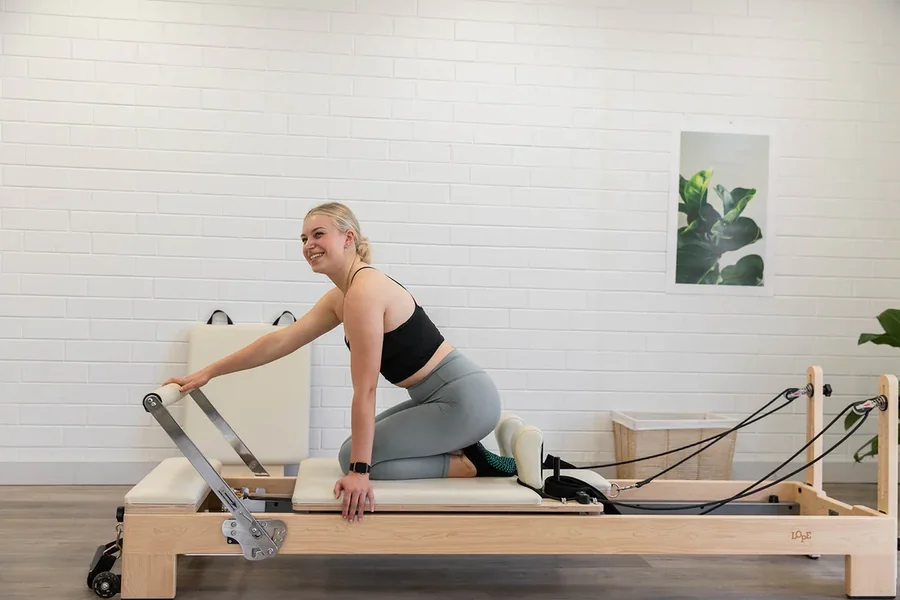
In Pilates, where strength and flexibility meet mindful movement, a Pilates Reformer Bed could be your key to a more dynamic practice. This guide explores essential tips to help you navigate the options and choose the perfect Reformer for your space and fitness goals.
Let’s unravel the features and demystify the technical jargon to ensure your investment enhances your Pilates experience at home. When you buy pilates reformer beds, you may wish to consider the following factors:
Needs to Be Moved Regularly
Consider a lighter reformer (such as the one made of metal). Some variations come on wheels or can collapse for storage. The movable reformers are usually cheaper than the fixed reformers.
However, they also tend to be a bit more flimsy and can have a much shorter life span. The lighter reformers can be a good option if you need to use a particular room for different types of classes (for example, to run matwork classes as well as reformer classes).
Staying in One Place
The best option would be to purchase a reformer, which acts like furniture. These reformers can be made of metal, but most of the time are made in the traditional wooden style.
These reformers look more stylish and are usually more comfortable lying on. They tend to be much heavier than collapsible reformers, and you will need a minimum of two people to move them due to their weight.
The Reformer Design
Remember that some reformers are designed more for personal home use than others for commercial use. The reformers designed for commercial use will likely be more robust and withstand many clients using them regularly. The personal use reformers may only withstand a few clients’ repetitive long-term wear.
What Type Of Clients Will You Be Teaching
Elderly or injured clients may find it difficult to get up and down off the floor, so consider avoiding a low reformer.
Athletes and tall people tend to do better on the traditional, higher off-the-ground reformers because they usually have stronger spring resistance and are more suitable for advanced exercises.
Clients with neck pain do better on traditional reformers with adjustable pulley heights. This is because a reformer with the pulley height set down low tends to overwork the Upper Trapezius when the clients are performing arm exercises.
Does It Have Functional Elements
- Does the headrest incline? (this can be very useful for clients with neck pain)
- Is it lifted up off the floor? (reformers on the ground make it tricky to perform certain exercises like Scooter)
- Does it have a wide range of resistance options to challenge clients of different levels (ie. A range of light, medium and heavier springs)
- Does it have stoppers?
- Is the pulley height adjustable?
What is my Budget
Reformers can range in price from a few hundred dollars to $10,000. You often get what you pay for when it comes to reformers. You should also research any accessories that do not come with the reformer. Double-check if the reformer comes with any of the following accessories or if there are additional items that you will need to purchase:
- Box
- Straps
- Springs (or similar resistance)
- Head Cushions
It is also useful to research the cost of replacing components of the reformer, for example, what is the cost of replacing springs, and how often does the manufacturer recommend replacing these parts?
Conclusion
Choosing the right Pilates Reformer Bed is crucial in enhancing your Pilates practice at home. By understanding your needs and considering factors such as mobility, design, and functionality, you can make an informed decision that aligns with your space and fitness goals.