
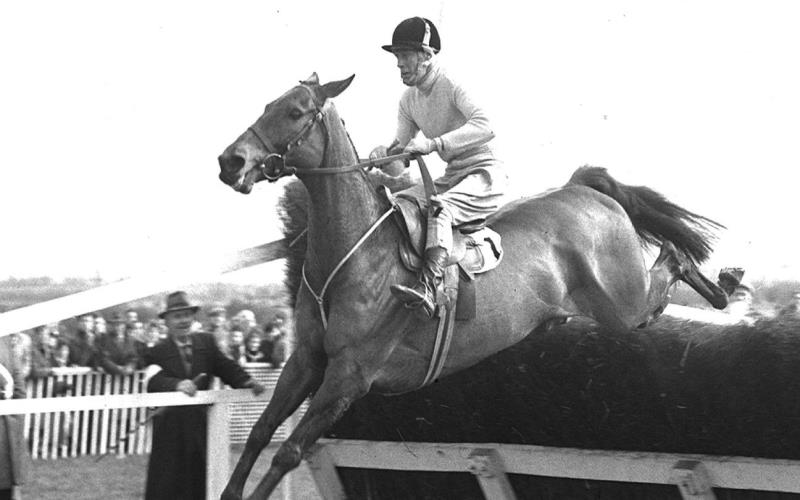
Arkle, often hailed as the greatest steeplechaser of all time, wasn’t just a racing legend—he was a betting phenomenon. Between 1962 and 1966, this Irish-bred superstar dominated National Hunt racing, winning 27 of his 35 starts, including three consecutive Cheltenham Gold Cups (1964–1966). His sheer dominance made him one of the shortest-priced favorites in betting history, often starting races at odds as low as 1/10. For punters, backing Arkle was as close to a sure thing as horse racing could offer, but his story also highlights how bookmakers adjusted to an unbeatable force and how his legacy still influences betting today.
Arkle’s Unbeatable Streak
Trained by Tom Dreaper and ridden by Pat Taaffe, Arkle’s brilliance was unmatched. His Timeform rating of 212 remains the highest ever awarded to a steeplechaser, surpassing even modern greats like Kauto Star and Denman. His most famous victories came in the Cheltenham Gold Cup, where he demolished rivals by ever-increasing margins. In the 1964 Gold Cup, he beat Mill House—a previous Gold Cup winner—by five lengths. By 1966, he was winning by 30 lengths, making a mockery of the competition.
Because of his dominance, bookmakers often offered minimal odds on Arkle, sometimes refusing to take bets altogether. Traditional each-way betting became irrelevant—Arkle either won, or something extraordinary had happened. Punters looking for value had to explore alternative markets, such as forecasting the winning margin or betting on races where Arkle wasn’t running.
The Impact on Betting Markets
Arkle’s supremacy forced bookmakers to rethink their approach. With such a dominant horse, they faced massive liabilities every time he ran. Some firms introduced “without Arkle betting , allowing punters to wager on who would finish best of the rest. This concept remains popular today in sports like golf and Formula 1, where one dominant competitor (like Tiger Woods in his prime or Max Verstappen in recent years) skews the odds.
Another key development was the rise of handicap adjustments. Arkle’s superiority was such that he frequently carried crushing weights in handicap races, yet still won. His presence in a race could distort the handicap system, making it nearly impossible for rivals to compete on fair terms. Modern handicapping still considers the “Arkle effect”—when a horse is so superior that adjusting weights barely levels the field.
Arkle’s Legacy in Modern Betting
While no horse since has matched Arkle’s sheer dominance, his influence persists in how bookmakers and punters approach unbeatable favorites. Short-priced superstars like Frankel (flat racing) or Constitution Hill (jumps) evoke similar betting strategies—either take the minuscule odds or look for creative alternatives.
Moreover, Arkle’s story is a reminder of how rare true greatness is in horse racing. Modern punters often chase “the next Arkle,” but such horses come once in a generation. His career also underscores the importance of recognizing when a favorite is truly unbeatable—a lesson that can save bettors from costly upsets.
Conclusion
Arkle wasn’t just a horse; he was a betting revolution. His dominance reshaped how odds were set, how handicaps were calculated, and how punters approached races featuring an all-time great. Even decades after his retirement, his name remains synonymous with racing excellence and unbeatable betting propositions. For those lucky enough to have backed him during his prime, Arkle was the closest thing to free money in horse racing—a legend whose impact on the sport and betting world will never be forgotten.


