

Choosing a driving school is not a routine purchase. For most families, it means placing a teenager, or an anxious adult learner, in the care of someone they have never met and trusting that person to teach a skill with serious consequences. That decision is rarely made on price or convenience alone. It is made on confidence.
For local schools, this creates both a challenge and an opportunity. Families look for proof long before they enroll: proof that the school is safe, organized, honest about its pricing, and familiar with the roads their children will drive. Schools that run on dependable driving school management software find it easier to provide that proof consistently, because schedules, payments, and student records remain accurate from the first inquiry onward.
That proof also has to be visible where families search. A school’s website and local search presence are often where a parent forms a first opinion, which is why many owners work with a website design and local seo marketing agency to present their credentials clearly to nearby students.
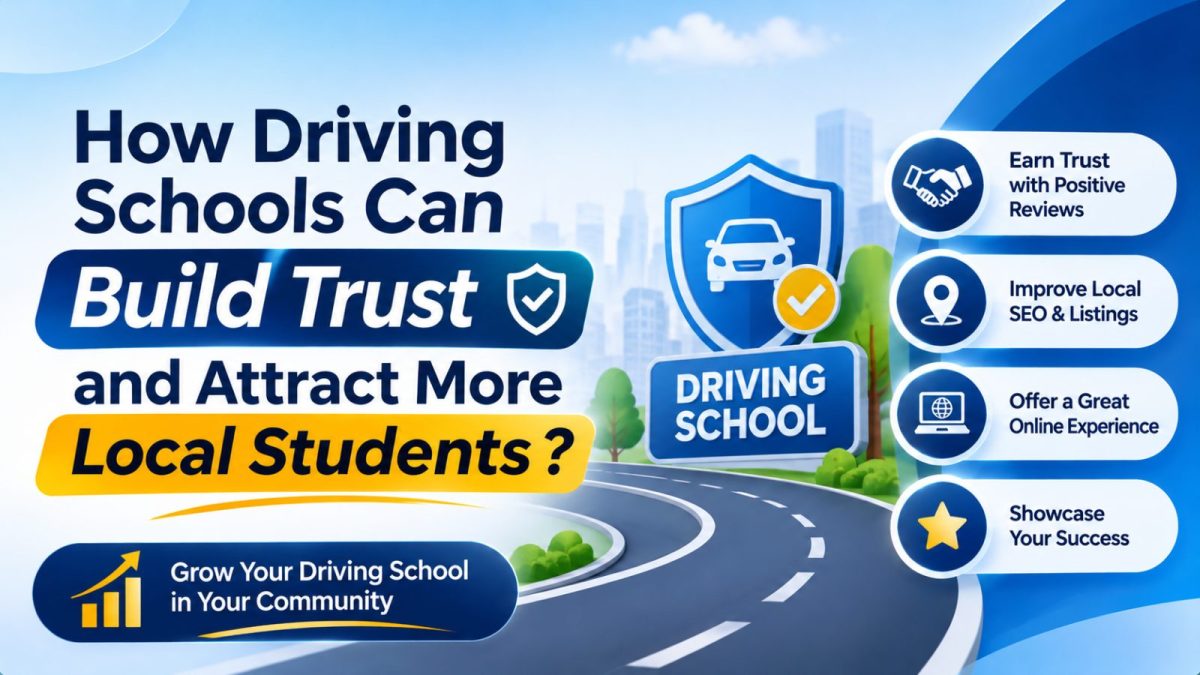
The sections below examine the specific questions families ask before selecting a driving school, and how schools can answer each one in a way that builds trust and steadily attracts more local enrollments.
Why Trust Weighs More Heavily in Driver Education
In most local service categories, a disappointing experience costs time or money. In driver education, the stakes feel considerably higher. Parents are evaluating the person who will sit beside their child in moving traffic, and adult learners are often managing genuine anxiety about driving at all.
The purchase is also divided between two people. A parent typically researches and pays, while the teen experiences the service. A school has to earn confidence from both, and each looks for different signals. Parents want evidence of safety and professionalism. Teens care about patience, respect, and lesson times that fit around school and activities.
Schools that understand this dynamic stop treating marketing as a matter of visibility alone. They focus on answering the questions families are already asking, ideally before those families have to ask them.
“Will My Child Be Safe in That Car?”
Safety is the first filter families apply, and it should be addressed directly rather than assumed. Parents respond to specifics: vehicles equipped with dual-control brakes, regular maintenance and inspection schedules, appropriate insurance coverage, and instructors who have completed state certification and background checks.
Too often, this information sits in a policy binder at the office. Schools that earn trust publish it plainly on their website, explain it during the first conversation, and reinforce it in enrollment materials. Photos of the actual training vehicles, rather than stock imagery, add a credibility that general claims cannot.
A short written safety commitment, covering pickup procedures, how beginners are introduced to traffic, and how weather-related cancellations are handled, gives parents something concrete to rely on and share with other family members.
“Who Will Actually Be Teaching?”
Families feel far more comfortable when the instructor is a known person rather than a name assigned at random. Instructor profiles with real photos, certifications, years of experience, and a brief note on teaching approach do a great deal to reduce first-lesson nerves for both students and parents.
Continuity matters as well. When a student works with the same instructor, or a small and consistent team, parents receive clearer feedback and students build confidence faster. If a change is unavoidable, a short handoff note and an introduction before the next lesson preserve the relationship the school has worked to build.
Teen students in particular often decide whether they like a school within the first two lessons. Matching personalities thoughtfully, where scheduling allows, is a modest investment that pays off in completion rates and word-of-mouth referrals.
“Will the Price We See Be the Price We Pay?”
Few things erode trust faster than unexpected charges. Fuel surcharges, road test vehicle fees, late cancellation penalties, and certificate processing costs are reasonable in principle, but they quickly become sources of frustration when families discover them after enrolling.
Trusted schools publish complete package details: exactly what is included, what costs extra, and how cancellations and refunds work. Clear terms do not discourage enrollment. They attract families who are comfortable with the policies from the outset and prevent disputes later.
The way pricing is presented also matters. A simple comparison of packages, with the recommended option for each type of learner clearly explained, helps families choose with confidence instead of guessing. Flexible payment options, such as installments for larger teen packages, signal that the school understands the financial realities of the households it serves.
“Will We Get Lessons When We Need Them?”
A school can make an excellent first impression and still lose a family’s trust within weeks if lessons are hard to book, confirmations are inconsistent, or instructors arrive late. Reliability is one of the most persuasive trust signals a school can offer, precisely because families experience it again and again.
This is where operational systems directly shape reputation. Online booking based on real availability, automatic confirmations and reminders, and instructor schedules that update instantly all reduce the small lapses that make a school appear disorganized.
Some schools are taking this further with platforms built around their own way of working. NewAgeSysIT, a custom software development company, works with driving schools to adapt a proven platform to each school’s processes, typically combining an admin portal, an instructor app, and a student app that carry the school’s own brand. For families, the experience feels consistent and professional. For the school, owning the platform means new features can be added as its programs evolve.
Whatever tools a school uses, the principle remains the same: every commitment made during enrollment should be kept by the system, not by someone’s memory.
Local Knowledge as a Trust Signal
Families choosing a local driving school want more than general instruction. They want an instructor who knows the busy intersection near the high school, the highway merge that unsettles new drivers, and the conditions around the nearest road testing center.
Schools can make this expertise visible. Content that addresses local driving conditions, such as preparing for a specific testing location, handling seasonal weather on regional roads, or navigating heavy commuter corridors, demonstrates a familiarity that out-of-area competitors cannot match. Service area pages that describe each neighborhood or school district served, rather than simply listing town names, strengthen both credibility and local search relevance.
This kind of content also mirrors the questions families actually type into search engines. That alignment makes it one of the most practical ways to attract nearby students while reinforcing the school’s standing as the local expert.
Community Presence That Builds Familiarity
Trust develops faster when a school is already familiar before a family needs it. Hosting free parent information sessions on graduated licensing rules, running safe driving workshops ahead of prom and graduation season, or contributing practical driving tips to local news outlets and neighborhood groups all build recognition in ways that paid advertising cannot.
These activities position the school as a local authority on road safety rather than simply another vendor. When a parent eventually begins searching for lessons, a name they have already encountered in their own community carries immediate credibility, and that familiarity often shortens the decision considerably.
Trust Is Earned in the Details
Attracting more local students rarely depends on a single campaign. It depends on answering the questions families care about with clear evidence: safe vehicles, known instructors, honest pricing, dependable scheduling, and genuine knowledge of local roads.
Schools that make these details visible, and then deliver on them consistently, build the kind of reputation that turns one enrolled family into several. In a business so closely tied to its community, that steady accumulation of trust remains the most reliable foundation for growth.

