If you’ve ever planned an event, you know the truth: the “fun part” is the vision, and the hard part is everything else. The timelines, vendors, gear, staffing, rehearsals, setup, and the thousand tiny decisions that determine whether the room feels effortless or chaotic. That’s where full event production comes in.
Full event production is the end-to-end management and execution of an event’s technical and operational elements. It’s the difference between cobbling together separate vendors and having one team responsible for making the whole experience work. For conferences, galas, brand launches, concerts, corporate meetings, and large private events, it can be the smartest way to reduce stress, improve quality, and keep things on schedule.
This article explains what full event production includes, what the process typically looks like, how to budget realistically, and how to choose a production partner that fits your goals.
What Full Event Production Means
Full event production is a comprehensive service that covers planning, design, logistics, technical production, and on-site execution. It typically includes audio, lighting, video, staging, power, rigging, and staffing, plus the management needed to coordinate all moving parts.
Some teams also include scenic design, set builds, content playback, live streaming, camera operations, event recording, and show calling. The exact scope depends on the event type, venue, and complexity. The main idea is that one production team owns the technical side and the run-of-show execution so the event runs cleanly.
What’s Usually Included in Full Event Production
Different production companies package services differently, but most full event production engagements include the same core components.
Audio is one of the biggest pieces. It involves microphone planning, speaker placement, mixing, and ensuring every seat can hear clearly without feedback or dead zones. This includes lav mics, handhelds, podium mics, headset mics, and any playback audio for videos or walk-on music.
Lighting usually includes both functional and design elements. Functional lighting ensures presenters can be seen and recorded clearly, while design lighting sets the mood and supports brand aesthetics. This can include stage washes, uplighting, moving lights, spotlights, and architectural lighting for the room.
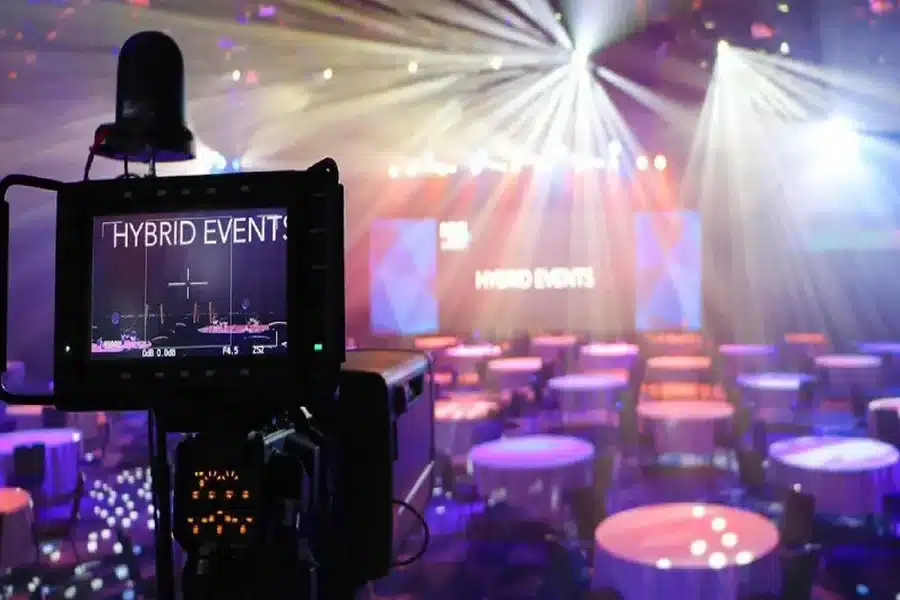
Video can range from simple screen support to a full broadcast-style setup. It often includes projectors or LED walls, screen management, presentation playback, confidence monitors, and camera support for IMAG (live camera on screens). Many events also need content switching and show graphics.
Staging and scenic elements include the physical setup of the stage, podiums, steps, backdrops, scenic walls, furniture, and other structures that shape what the audience sees.
Power and rigging are the behind-the-scenes essentials that make everything safe and reliable. Power planning covers distribution, circuits, cable management, and backup planning. Rigging involves hanging lights, speakers, and screens safely, especially in venues with high ceilings or complex installs.
Staffing is often the most underrated value of full event production. That includes audio engineers, lighting technicians, video operators, camera crew, stagehands, and often a technical director or show caller who runs cues and keeps the show on time.
The Full Event Production Process
A good production team follows a clear process that reduces surprises.
It usually starts with discovery, where the team learns your goals, audience, venue details, run-of-show needs, and brand look. This is when you align on what “success” looks like. It’s also where you uncover constraints like venue rules, load-in windows, sound limits, union labor requirements, and rigging restrictions.
Next comes planning and design. The team maps out equipment needs, stage layout, audio coverage, lighting design, video plan, and staffing. This is also where your production schedule starts to take shape, including load-in, setup, rehearsal, doors, show, and strike.
Then you move into pre-production coordination. This includes confirming venue logistics, coordinating with speakers, collecting and formatting slide decks, planning video playback, building cue sheets, and setting clear timelines. If your event includes live streaming or recording, this is where testing and platform planning happen.
On-site execution is where full event production earns its reputation. The team handles load-in, build, sound check, lighting focus, video tests, rehearsals, and show operation. During the event, they run cues, manage transitions, troubleshoot issues quietly, and keep everything moving.
After the show, strike and load-out happens, and some teams also support post-event deliverables like edited recordings, highlight reels, and asset handoff.
Why Full Event Production Can Be Worth It
Full event production reduces coordination risk. When you hire separate vendors for AV, lighting, staging, and streaming, you spend a lot of time acting as the glue. When one production team owns the whole technical picture, it’s clearer who is responsible for outcomes.
It also improves consistency. Audio, lighting, and video should feel like one cohesive experience, not separate decisions. A full production approach makes it easier to deliver a polished show that matches your brand and audience expectations.
It can also reduce stress. Events are high-pressure. Having a team that is used to solving problems in real time is often the difference between a calm event and a long day of panic.
Budgeting for Full Event Production
Pricing varies widely, but budgeting becomes easier when you know the cost drivers.
Venue size and layout matter because coverage needs change with room dimensions and ceiling height. The complexity of the show also matters. A simple panel discussion needs far less gear and labor than a multi-speaker conference with walk-on music, video packages, and tight cue sequences.
Equipment choices can shift costs significantly. LED walls, large-scale projection, moving lights, broadcast camera setups, and advanced audio systems add cost, but they may be necessary depending on the event goals and venue.
Labor is often a major part of the budget. Setup, rehearsals, show operation, and strike require skilled technicians, and certain venues require union labor or specific staffing minimums. Time is money in production, so last-minute changes can increase costs quickly.
If you’re budgeting, it helps to share your priorities. A strong production team can guide you to spend where it matters and simplify where it doesn’t.
What to Ask Before Hiring a Full Event Production Team
A good vendor conversation is specific, not vague. Ask how they handle planning, who your point of contact is, and who will be on-site. Ask how they build a run-of-show and manage cues. Ask how they handle content collection and slide formatting. Ask what happens if a key piece of equipment fails and what redundancy they include for critical systems.
It also helps to ask about venue familiarity. If they’ve worked in the venue before, it can reduce surprises around power, rigging, load-in, and acoustics.
Finally, ask how they measure success. A strong team will talk about clear audio coverage, smooth transitions, rehearsal discipline, contingency planning, and a calm show flow.
Common Mistakes to Avoid
One common mistake is underestimating rehearsal time. Even a simple show runs better with a real cue run and a speaker sound check. Another mistake is leaving content collection too late. Slides, videos, and walk-on music should be finalized and tested early, because file issues create chaos.
Companies also sometimes plan for “best case” venue access. Load-in windows, freight elevators, and union rules can affect the schedule. A production team should confirm these details early so your timeline is realistic.
Lastly, many events struggle because nobody owns the show flow. Full event production works best when there’s a clear run-of-show, a cue list, and one person calling the show.
Practical Takeaways
Full event production is the right fit when you need a polished, reliable event and you want one team accountable for the technical and operational execution. It usually includes audio, lighting, video, staging, power, rigging, staffing, and show management. The best production partners follow a clear process, plan for contingencies, and make rehearsals and content management part of the workflow, not an afterthought.
Conclusion
Full event production turns an event from a collection of vendors into a cohesive live experience. When the production team is strong, the event feels smooth, the audience stays engaged, and you get to focus on hosting instead of troubleshooting. If you’re planning an event where quality and reliability matter, full event production is one of the most effective ways to reduce risk and deliver a show that looks and feels professional.