Did you know more than 11 million Americans over age 12 need vision correction? That’s just one reason to get your eyes checked regularly. Many people think their eyesight is fine without realizing they might need glasses. And many wait years before going to an ophthalmologist, thinking the constant strain on their eyes will go away on its own.
Here’s a short guide explaining why annual eye exams are more important than you’d think:
How Often Should You Have an Eye Exam?
First things first, let’s rewind how often you should have an eye exam.
For children, the first eye exam should be conducted at six months of age, followed by another at three years old, and before starting school. After that, experts recommend annual eye exams.
This also applies to adults (40-60 years old) and seniors (60+ years old). That said, individuals with existing eye conditions are recommended to undergo more frequent eye exams.
Early Detection of Eye Diseases
One of the most common reasons to undergo annual eye exams is the early detection of eye diseases. Unfortunately, numerous eye diseases don’t show symptoms until they reach an advanced stage. This includes:
- Glaucoma
- Age-related Macular Degeneration (AMD)
- Diabetic Retinopathy
During your annual eye exam, the ophthalmologist would take in-depth patient history and conduct a series of eye exams to view the retina and optic nerve. Some key examination tests include:
Ophthalmoscopy (Fundus Exam)
The ophthalmologist uses a special lens to examine the inside of your eye. They examine the optic nerve and blood vessels. In case of diabetic retinopathy, they will notice damage to blood vessels in the back of the eye.
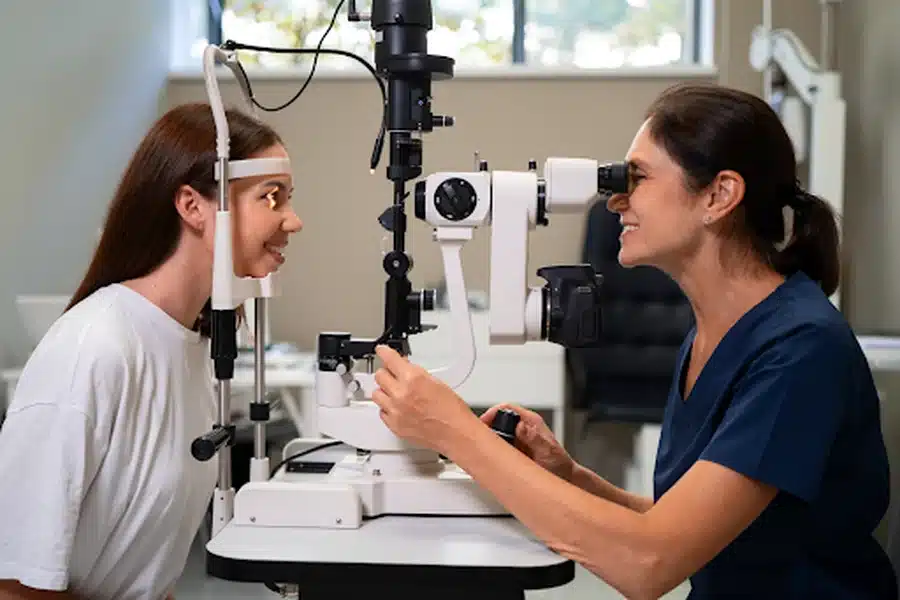
Slit-Lamp Exam
Clouding of the eye lens is one of the telling signs of cataracts and corneal scars. To examine such issues, your ophthalmologist will use a microscope to examine the front part of the eye, including the eyelids, cornea, iris, and lens.
Automated Visual Field Test
This test assesses your peripheral (side) vision, which can be affected by conditions like glaucoma.
Vision Correction and Prescription Updates
If you wear prescription glasses or lenses, annual eye exams are super important. They can help determine if your prescription needs an update. This will ensure clear vision and prevent unnecessary strain or discomfort.
Uncorrected vision can lead to a plethora of issues, such as dizziness and headaches, so never miss your annual eye appointment.
Overall Well-Being
Your eyes can reveal a whole lot about your health and overall well-being. Annual eye exams can help detect underlying health conditions, such as:
- Diabetes
- High blood pressure
- Stroke
- Aneurysm
- Certain cancers
- Lyme disease
- Multiple sclerosis
For instance, abnormal blood vessels or bleeding in the back of the eye can signal high blood pressure. Whereas yellow bumps on the eyelids in the retinal vessels are key indicators of high cholesterol.
Schedule your eye visit with a reputable eye clinic like Pearle Vision to ensure a thorough and detailed session.
Personalized Vision Advice
Lastly, your optometrist can provide personalized vision advice to help you maintain a healthy and consistent prescription. They can even recommend beneficial food items.