HVDC Contactor Solutions for Hydrogen Energy and Fuel Cell Systems
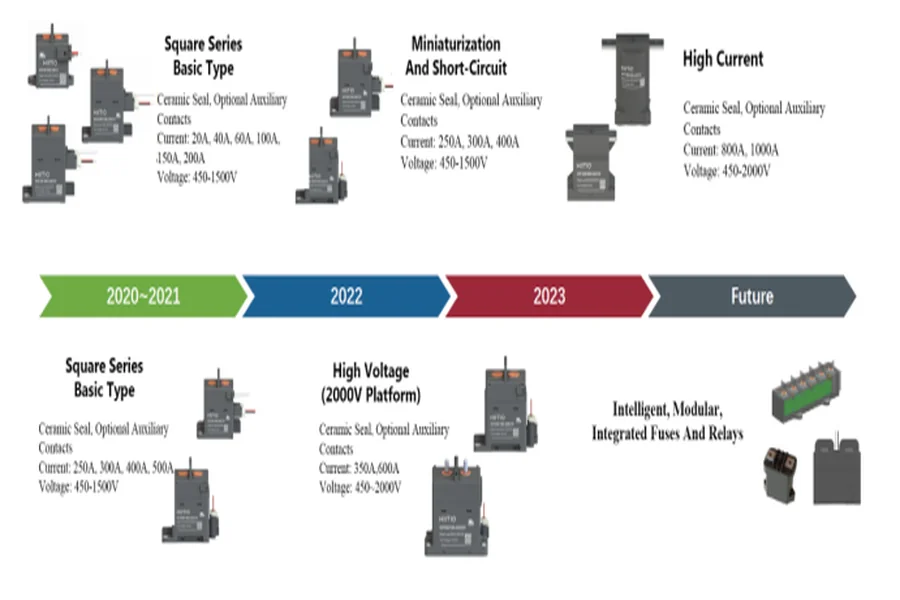
The global transition toward clean energy has positioned hydrogen and fuel cell technology as cornerstone solutions for decarbonization across multiple sectors. From heavy-duty transportation to stationary power generation, fuel cell systems require sophisticated electrical infrastructure capable of managing high-voltage DC power flows safely and efficiently. At the center of this infrastructure lie high-voltage DC contactors—critical components that enable, protect, and control the electrical pathways within hydrogen energy systems.
Fuel cell systems present unique electrical characteristics that distinguish them from conventional battery-electric architectures. Unlike batteries that store energy chemically, fuel cells generate electricity through electrochemical reactions between hydrogen and oxygen, producing water as the only byproduct. This continuous generation process requires high-voltage DC relays and contactors capable of handling variable load conditions, managing startup and shutdown sequences, and protecting against fault scenarios specific to hydrogen systems. Modern fuel cell vehicles operate at voltage levels between 400V and 800V, with commercial and industrial applications pushing toward even higher voltages to improve system efficiency and reduce current-related losses.
Understanding the fundamental role of DC contactors in these applications requires examining their core functions. A DC contactor serves as an electrically controlled switch that makes or breaks DC circuits, providing galvanic isolation when open and low-resistance pathways when closed. In fuel cell systems, these devices perform multiple critical functions: connecting the fuel cell stack to the power electronics during operation, isolating the stack during maintenance or emergency scenarios, providing pre-charge pathways to safely energize capacitive loads, and protecting against overcurrent or short-circuit conditions.
System Architecture and Integration Challenges
Fuel cell system architectures typically incorporate multiple DC contactors at strategic locations throughout the electrical topology. The main positive and negative contactors connect the fuel cell stack to the DC bus, while pre-charge contactors work in conjunction with current-limiting resistors to gradually charge the DC link capacitors before main contactor closure. This pre-charge sequence prevents inrush currents that could damage sensitive power electronics or create voltage transients affecting control systems.
The integration of contactors within fuel cell systems must address several technical challenges:
- Voltage isolation requirements exceeding 1000V to ensure personnel safety and prevent leakage currents
- Current interruption capability sufficient to break nominal load currents plus specified fault current levels
- Mechanical and electrical endurance to withstand hundreds of thousands of switching cycles over the system lifetime
- Compact packaging to fit within increasingly space-constrained fuel cell enclosures
- Environmental resistance to humidity, vibration, thermal cycling, and potential hydrogen exposure
- Low contact resistance to minimize voltage drop and power dissipation during normal operation
Modern fuel cell systems for commercial vehicles may require contactors rated for continuous currents of 300-500A with breaking capacities approaching 1000A. These specifications demand robust contact materials, typically silver-based alloys with refractory metal additions, and sophisticated arc control mechanisms utilizing magnetic blow-out coils or ceramic arc chutes.
Hydrogen-Specific Considerations
The presence of hydrogen introduces unique safety considerations that influence contactor design and application. While hydrogen is non-corrosive to most metals and does not directly degrade electrical contacts, the potential for hydrogen accumulation in enclosed spaces necessitates careful consideration of contactor housing design and arc containment. Hydrogen’s wide flammability range (4-75% by volume in air) and low minimum ignition energy require that contactors minimize arc energy and prevent hot gas expulsion that could ignite hydrogen-air mixtures.
Several design approaches address these hydrogen safety concerns:
- Sealed contact chambers using hermetic or semi-hermetic designs to prevent hydrogen ingress
- Arc energy limitation through rapid arc extinction and current limiting during interruption
- Fail-safe mechanical designs ensuring contacts default to the open position in case of actuator failure
- Redundant isolation employing multiple contactors in series for critical isolation functions
- Integrated monitoring with auxiliary contacts providing real-state feedback to the control system
Certification standards for hydrogen applications, including ISO 19881 for fuel cell road vehicles and IEC 62282 for stationary fuel cell systems, establish rigorous testing protocols for components operating in hydrogen environments. Contactors must demonstrate reliable operation across temperature ranges from -40°C to +85°C or higher, withstand vibration profiles exceeding 20G, and maintain electrical integrity after thousands of mechanical and electrical endurance cycles.
Emerging Applications and Power Scaling
As hydrogen energy systems expand beyond light-duty vehicles into heavy-duty transportation, maritime applications, and grid-scale energy storage, contactor requirements are evolving rapidly. Heavy-duty fuel cell trucks operating at 700-800V nominal voltage require contactors capable of switching 600-800A continuously while interrupting short-circuit currents approaching 3000A. These demanding specifications push the boundaries of conventional contactor technology, driving innovation in contact materials, magnetic actuation systems, and thermal management approaches.
Maritime and railway applications introduce additional environmental challenges including salt spray exposure, sustained vibration, and extended operational duty cycles. Contactors for these applications often incorporate:
- Enhanced corrosion protection through specialized coatings and sealing technologies
- Oversized thermal management to handle continuous high-current operation in elevated ambient temperatures
- Ruggedized mechanical construction to withstand shock and vibration exceeding automotive specifications
- Extended electrical endurance ratings reflecting operational profiles with fewer but longer-duration switching events
Stationary fuel cell systems for backup power, combined heat and power (CHP), or grid support applications may operate for years with infrequent switching events but must maintain readiness for immediate activation. These applications prioritize long-term reliability, minimal maintenance requirements, and resistance to degradation during extended idle periods.
Advanced Control and Diagnostic Integration
Modern fuel cell systems increasingly integrate contactors with sophisticated control and diagnostic capabilities that extend beyond simple on-off switching. Intelligent contactor modules may incorporate:
Contact wear monitoring through resistance measurement or auxiliary contact degradation tracking that predicts maintenance requirements before failure occurs. This predictive maintenance approach minimizes unplanned downtime and optimizes replacement scheduling.
Temperature sensing at contact interfaces and coil windings provides early warning of thermal issues resulting from contact degradation, overload conditions, or inadequate ventilation. Integration with the fuel cell control system enables load derating or controlled shutdown before damage occurs.
Current measurement via integrated Hall effect sensors or shunt resistors eliminates the need for separate current sensing devices, reducing system complexity and cost while improving accuracy through direct measurement at the switching point.
Diagnostic protocols utilizing CAN bus, LIN bus, or other automotive communication standards enable real-time status reporting and integration with vehicle or system-level diagnostic tools. This connectivity facilitates remote monitoring, fleet management, and accelerated troubleshooting.
Future Developments and Innovation Directions
The continued evolution of hydrogen energy systems will drive ongoing innovation in HVDC contactor technology. Research and development efforts focus on several promising directions including solid-state switching devices that eliminate mechanical contacts entirely, hybrid architectures combining mechanical contactors with semiconductor switches for optimized performance, and advanced materials enabling higher voltage and current ratings in smaller packages.
The integration of wide-bandgap semiconductors such as silicon carbide (SiC) in hybrid contactor designs offers the potential for zero-voltage switching, reduced arc energy, and extended contact life. However, the economics of fully solid-state solutions remain challenging for high-current applications, ensuring that electromechanical contactors will continue serving critical roles in hydrogen energy infrastructure for the foreseeable future.
As hydrogen emerges as a viable energy carrier for global decarbonization, the supporting electrical infrastructure—including high-performance HVDC contactors—will prove essential to realizing the full potential of this clean energy technology.