
Streamlining Field Operations: Scheduling, Dispatch, and Using AI in HVAC
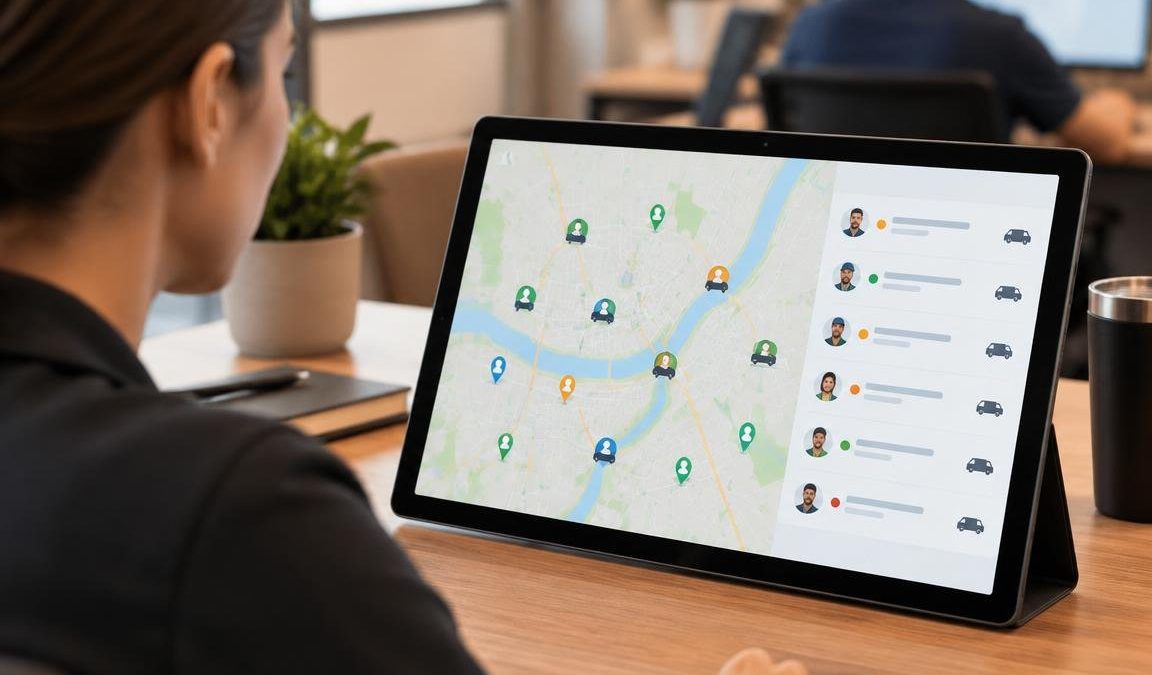
The backbone of any home service business is its ability to get the right technician to the right place at the right time. Historically, this has been a manual, high-stress game of Tetris played by dispatchers trying to juggle emergency calls, traffic delays, and changing customer schedules. Today, smart automation is changing the game entirely. By leveraging AI-driven platforms, contractors can move away from reactive scheduling and toward proactive, data-informed operations that maximize technician productivity and reduce operating expenses.
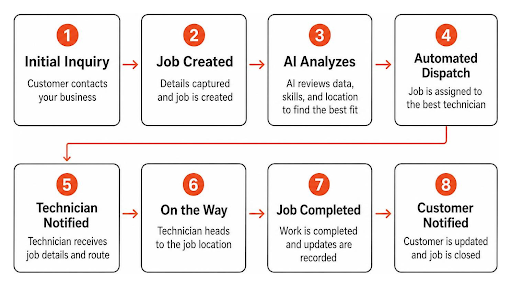
Intelligent dispatching systems do far more than just plot coordinates on a digital map; they continuously analyze live traffic conditions, technician certifications, truck inventory, and historical job completion times to suggest the most efficient routes and job sequences. This dramatically reduces unnecessary windshield time and lowers fuel consumption across your entire fleet, directly improving profitability. When your dispatch board is automated, you eliminate bottlenecks and empower dispatchers to handle exceptions rather than routine data entry. The result is a substantial increase in completed billable calls per day without requiring additional office staff.
To get the most value from these tools, contractors should define clear dispatch rules before turning on automation. For example, emergency no-cool calls may always receive priority during a heat advisory, while maintenance visits can be moved within a flexible arrival window. The same system can flag jobs that require two technicians, specialized recovery equipment, a lift, or a specific replacement part before the truck rolls. This prevents avoidable rescheduling and helps office teams communicate accurate expectations to homeowners. Over time, the platform learns from outcomes such as drive time, average repair duration, and whether the technician completed the job on the first visit. Those lessons make future scheduling recommendations more accurate and easier for dispatchers to trust.
Predictive Maintenance: Using AI in HVAC Systems for Early Fault Detection
One of the most exciting frontiers in the home services industry is the shift toward predictive maintenance. Rather than waiting for a customer to call in distress with a catastrophic system failure during an extreme heatwave or freeze, AI enables service providers to identify anomalies long before a breakdown occurs. By integrating smart IoT sensors with cloud-based machine learning models, technicians can remotely track temperature differentials, compressor vibration patterns, refrigerant pressures, and electrical current draws in real time.
When these diagnostic platforms detect a performance baseline drift, they immediately generate an alert, prompting proactive outreach to the homeowner. This model redefines customer relationships, turning seasonal tune-ups into continuous protection plans. For contractors exploring modern workflows, using AI in HVAC allows even small and mid-sized businesses to offer enterprise-grade monitoring, elevate service contract retention, and secure predictable recurring revenue.
A practical predictive maintenance program does not have to begin with every piece of equipment in a customer’s home. Many contractors start with high-value systems, older equipment, or service agreement customers who already expect regular communication. The goal is to establish a normal operating baseline, then monitor for deviations that suggest an emerging issue. A rising amp draw on a blower motor, repeated short cycling, or a widening temperature split can all point to problems that are cheaper to correct early. These alerts also create better conversations with homeowners because the technician can arrive with evidence, likely causes, and recommended options instead of relying only on a one-time snapshot during the visit.
Real-Time Fleet Tracking and Skills-Based Work Order Routing
Managing a fleet effectively requires deep alignment between job complexity and individual technician capabilities. AI-powered dispatch tools evaluate historical diagnostic accuracy, ticket sizes, and resolution speed to assign incoming work orders intelligently. For instance, if an advanced multi-zone heat pump or complex plumbing repiping job is booked, the software routes it to the technician with the highest first-time fix rate for that specific equipment category. This reduces costly callbacks, boosts customer satisfaction, and ensures every service appointment reaches its full revenue potential.
For dispatch managers, skills-based routing also creates a more balanced training environment. Newer technicians can be assigned maintenance visits, simple repairs, or ride-along opportunities that match their current proficiency, while senior technicians remain available for complex diagnostics and higher-risk installations. The software can surface patterns that are difficult to spot manually, such as a technician who excels at tankless water heater repairs but struggles with communicating replacement options, or a crew that consistently completes ductless installations faster than the company average. With that information, managers can coach more precisely, build better teams, and protect the customer experience even as call volume grows.
Enhancing Customer Acquisition and Lead Qualification with Smart Automation
In the home services world, speed to lead is the deciding factor in winning business. Industry studies consistently show that contacting an inbound lead within five minutes increases the likelihood of booking the appointment by nearly eightfold compared to waiting thirty minutes. However, when office staff are overwhelmed during peak morning call rushes or after normal operating hours, answering every inquiry instantly is difficult. Smart conversational automation bridges this gap by engaging prospective customers across phone, text, and web channels without delay.
Feature Traditional CSR Workflow AI-Powered Communication Response Time Dependent on staff availability Instant, 24/7 Lead Qualification Manual questioning Automated, data-driven Booking Manual entry into calendar Real-time, direct to CRM Follow-up Periodic manual outreach Automated, personalized sequences 24/7 Virtual CSRs and Omnichannel Booking Assistants
Modern voice AI and web chat agents have evolved far beyond rigid, scripted decision trees. Powered by natural language understanding, these assistants carry on fluid, context-aware dialogues that gather key details such as equipment age, issue descriptions, and home address before matching the customer with an available time slot. If a homeowner discovers a burst pipe or an inoperable furnace in the middle of the night, the virtual CSR can troubleshoot basic safety concerns, confirm service territory coverage, and insert the booking directly into your field service management software. Capturing these after-hours opportunities prevents lost revenue and delivers a seamless experience that sets you apart from competitors.
Targeted Local Marketing: Using AI in HVAC and Plumbing Lead Generation
Digital marketing for contractors is moving away from broad keyword matching toward deep consumer intent analysis. When homeowners search long-tail queries like “why does my heat pump freeze in winter” or “cost to replace main water line,” they are looking for specific, trustworthy answers. AI content optimization tools help contractors identify these high-intent local queries and structure landing pages with precise schema markup and natural language answers. This structured approach helps search engines recognize your domain authority and feature your business in AI-assisted search summaries, driving higher organic traffic and phone calls from ready-to-buy homeowners.
Optimizing Estimates, Pricing Strategy, and Revenue Growth
The days of relying on manual paper estimates, arbitrary price markups, or rigid flat-rate books that fail to account for fluctuating parts costs are quickly ending. Modern field management tools utilize machine learning to generate accurate, transparent estimates that reflect current supply chain costs, labor rates, and project complexities.
Automated Estimating and Accurate On-Site Scoping
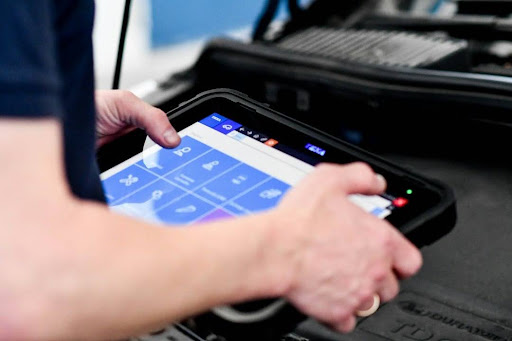
On-site scoping can be executed with precision using mobile 3D scanning, photographic analysis, and automated sizing calculators. When a technician inspects a job site, mobile AI tools can calculate square footage, ductwork requirements, or pipe lengths directly through a tablet camera. The system then populates a tiered good-better-best proposal complete with itemized parts, financing options, and warranty information within minutes. Presenting professional, visual options on-site removes ambiguity, eliminates lengthy proposal delays, and prevents prospective clients from seeking competitor quotes while waiting for an estimate.
Dynamic Pricing Models and Real-Time Sales Analytics
Sustained revenue growth requires a granular understanding of job margins and operational overhead. AI analytics platforms connect job costing data with technician performance metrics to reveal which services yield the highest gross margin and which result in profit leakage. By evaluating historical closing ratios, seasonal demand spikes, and regional market trends, these platforms can recommend dynamic pricing adjustments. If data indicates high demand for emergency weekend repairs, automated rules can adjust labor multipliers accordingly while preserving healthy margins across standard installations.
Key Considerations and Best Practices for Implementing AI in Home Services
Successfully adopting artificial intelligence in a trade business is not about replacing human expertise; it is about establishing solid data habits and enhancing the workflow of your team. The contractors who achieve the strongest return on investment treat AI as an operational co-pilot that removes friction from everyday tasks.
Managing Data Privacy and Software Integrations
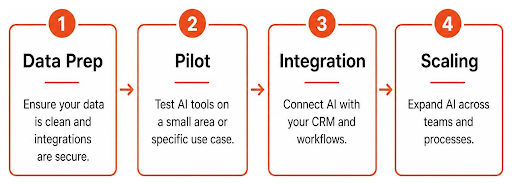
Before deploying any AI application, auditing and cleaning your existing customer records is essential. Machine learning algorithms rely on accurate historical records to make valid dispatch and marketing predictions. If your CRM contains duplicate records, incomplete job notes, or outdated billing data, automated workflows will stumble. Establish clear internal data entry standards, verify that third-party software connects via encrypted APIs, and update your company privacy policies to ensure compliance with regional data protection standards.
Augmenting Skilled Labor Without Displacing Technicians
A common misconception is that automation threatens skilled field technicians. In practice, AI takes over repetitive administrative tasks such as logging equipment serial numbers, writing invoice descriptions, tracking parts inventory, and planning travel routes. Technicians equipped with mobile AI diagnostics spend less time on administrative paperwork and more time applying their hands-on craft. This reduces burnout, increases job satisfaction, and helps contractors onboard and support apprentices more effectively during an ongoing industry-wide labor shortage.
Frequently Asked Questions About AI in Home Services
Will AI replace human technicians in the skilled trades?
No. The skilled trades rely on physical dexterity, complex problem-solving in unpredictable environments, and human trust. AI is a tool that augments these roles by providing data, diagnostics, and administrative support, but it cannot replace the craftsmanship of a skilled professional.
How quickly can a small home service company see ROI from AI?
Many companies see immediate ROI by reducing missed calls and improving response times. By capturing just a few extra jobs per week that would have otherwise gone to voicemail, the software often pays for itself within the first few months.
What is the easiest AI tool for a contractor to implement first?
Start with after-hours chatbots or automated review replies. These tools solve immediate, high-pain problems (missed inquiries and reputation management) with very little technical setup, providing quick wins that build momentum for larger integrations.
Conclusion
The transition to an AI-enabled home service business is not just a technological upgrade; it is a strategic necessity. As consumer expectations for speed and transparency continue to rise, the contractors who can deliver a seamless, automated experience will be the ones who dominate the local market.
By streamlining your field operations, qualifying leads with precision, and using data to drive your pricing, you create a business that is not only more efficient but also more scalable. The goal of using AI is to remove the friction from your business so you can focus on the craftsmanship that built your reputation in the first place. Whether you are using AI in HVAC or managing a multi-trade plumbing and electrical outfit, the future belongs to those who embrace smart automation today. If you are ready to take the next step in your growth journey, contact us to explore how we can help you implement these strategies effectively.