

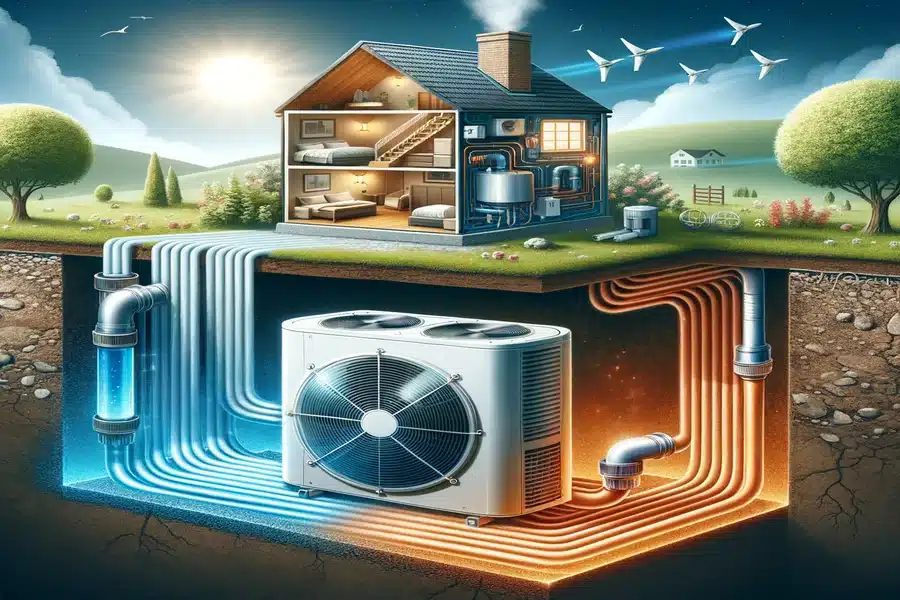

Heat pumps are often brought into the conversation when we talk about energy efficiency and home heating/cooling solutions. Heat pumps are incredibly versatile systems that can provide both heating and cooling, making them an attractive option for many homeowners. Whether renovating an old house or building a new one, understanding the different types of heat pumps and how they work is essential for making an informed decision. In this blog, we’ll explore the different kinds of heat pumps—air source, ground source, and water source—so you can figure out which one is the best fit for your needs.
What are Heat Pumps?
At its core, a heat pump is a device that transfers heat from one place to another, much like a refrigerator or air conditioner. Unlike traditional heating systems that generate heat, heat pumps work by moving existing heat from one location to another, making them an incredibly energy-efficient option. They can extract heat from the air, ground, or water and transfer it into your home. Conversely, they can reverse the process in warmer weather, cooling your home by removing heat and transferring it outside.
Air Source Heat Pumps
One of the most common types of heat pumps is the air source heat pump. As the name suggests, this system extracts heat from outside air and transfers it into your home. In the summer, the process reverses, and the system can also provide cooling by removing heat from the air inside your home and releasing it outside.
How Do Air Source Heat Pumps Work?
Air source heat pumps consist of two main components: an outdoor unit and an indoor unit. The outdoor unit contains a fan, coil, and compressor that extracts heat from the air outside, even in cooler temperatures. This heat is then transferred to a refrigerant, which is pumped to the indoor unit. Here, it is either released into your home for heating or used to cool the air by removing heat and releasing it outside.
The efficiency of an air-source heat pump is often measured in terms of its coefficient of performance (COP). The COP indicates how much heat is delivered per unit of energy consumed. For air-source systems, the COP can be quite high, which is why they are favored in moderate climates.
Ground Source Heat Pumps
Next is the ground-source heat pump, also known as a geothermal heat pump. As the name suggests, these systems extract heat from the ground, which remains at a relatively constant temperature throughout the year. This makes ground-source systems more efficient than air-source systems, especially in colder climates.
How Do Ground Source Heat Pumps Work?
Ground-source heat pumps utilize a series of underground pipes, often referred to as a loop system, buried several feet below the surface. These pipes are filled with a fluid (usually water or an antifreeze solution) that absorbs heat from the ground and brings it back to the heat pump unit. The system then uses this heat to warm your home during winter or cool it during summer.
The efficiency of ground source heat pumps is remarkable, especially in colder climates, because the temperature of the earth remains fairly stable throughout the year. However, these systems tend to have higher installation costs due to the need for excavation or drilling.
Water Source Heat Pumps
Water source heat pumps are another option to consider. These systems extract heat from a body of water, such as a lake, river, or pond. They are particularly useful in areas where there is easy access to a water source.
How Do Water Source Heat Pumps Work?
Similar to ground source heat pumps, water source heat pumps use a loop system, but instead of being buried in the ground, the pipes are submerged in water. The fluid inside the pipes absorbs heat from the water, which is then transferred to the heat pump unit and used for heating or cooling. In the summer months, the system reverses and cools your home by transferring heat from the indoor air to the water source.
One of the main benefits of water source heat pumps is their high efficiency, particularly in areas with a stable and reliable water source. However, they are not suitable for homes without easy access to a nearby water body.
Benefits of Each Type of Heat Pump
Each type of heat pump has its unique advantages, so it’s important to evaluate your needs before making a decision.
Pros of Air Source Heat Pumps
- Easy installation: Air source systems are relatively easy to install and don’t require major changes to your property.
- Cost-effective: They are often more affordable upfront compared to ground or water source systems.
- Effective in moderate climates: Air source heat pumps perform well in regions with mild winters and warm summers.
Pros of Ground Source Heat Pumps
- Superior efficiency: Ground source systems tend to have higher efficiency, especially in colder climates, because the earth’s temperature remains constant year-round.
- Longevity: These systems can last up to 50 years, with the loop system lasting even longer.
- Low maintenance: Ground source heat pumps require less maintenance than other types of systems.
Pros of Water Source Heat Pumps
- High efficiency: Water source systems are highly efficient, especially in areas with reliable water sources.
- Stable temperature: The temperature of the water remains relatively constant, making it easier to extract heat.
- Environmentally friendly: These systems have a minimal environmental impact and are great for sustainable living.
Which Heat Pump is Right for You?
Choosing the right type of heat pump for your home depends on various factors, such as your location, size, and budget.
Factors to Consider
- Climate: If you live in a region with harsh winters, a ground-source or water-source heat pump might be a better choice due to their higher efficiency in cold temperatures. Air-source systems can still be effective in milder climates.
- Installation space: Ground-source heat pumps require space for the loop system, which may require excavation. If you have limited outdoor space, an air-source or water-source system might be more suitable.
- Budget: While ground-source heat pumps tend to have a higher initial cost, their efficiency can save you money in the long run. Air-source systems are more affordable but may have higher operating costs in the long term.