

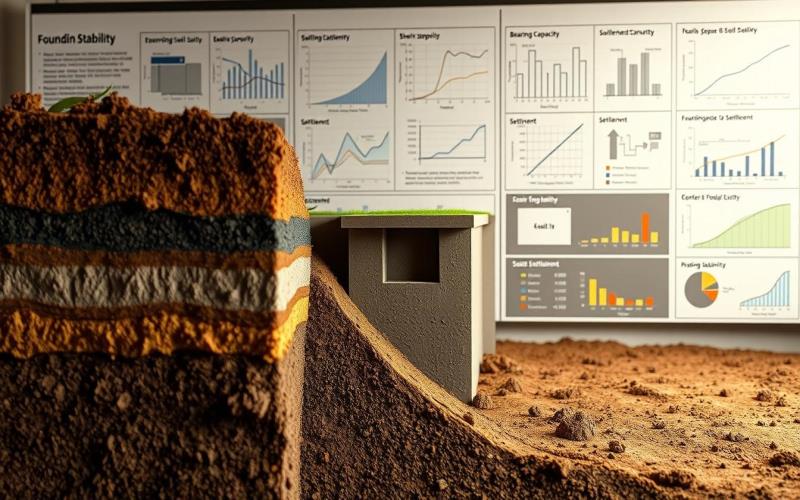

In Middle Tennessee, 25% of homes face foundation problems due to soil. Knowing about foundation stability starts with understanding soil’s role in supporting buildings.
Soil is made of minerals, organic matter, water, and air. Each soil type has its own challenges for foundations. In Middle Tennessee, clay, silt, sand, and loam are the main types affecting buildings.
Clay soils are the biggest risk for foundations. They swell and shrink a lot with moisture changes, leading to settlement issues. It’s key to know that soil affects your home’s structure.
Loam is the best soil type, covering about 40% of homes. It has a mix of clay, sand, and silt, offering strong foundation support.
Soil testing can cut down foundation repair costs by 50%. Knowing soil types before building helps engineers create stronger foundations.
Good water management and landscaping can lower foundation risks by 25%. It’s important for homeowners to understand their local soil types to safeguard their investment.
Understanding Basic Soil Properties and Their Influence
Soil is a complex system that is key to foundation stability. Knowing its properties helps engineers and homeowners make smart choices. The mix of soil composition, structure, moisture, and temperature affects building foundations.
Different soil types have unique traits that impact foundation performance. Let’s look at the main soil properties:
Composition and Structure of Soils
Soil types vary, each with its own challenges:
- Clay soils: Fine particles that hold a lot of water
- Sandy soils: Larger particles that drain well
- Loam soils: A mix that offers good foundation support
Clay soils can swell up to 15% when wet and shrink by about 10% when dry. This big change can stress foundations, causing problems.
Moisture and Temperature Dynamics
Soil moisture and temperature are key to foundation stability. Changes in moisture of 5-10% can cause big volume changes. Temperature changes, especially in areas with freeze-thaw cycles, make soil behavior even more complex.
Organic Content Impact
Soils rich in organic matter pose special challenges. High organic content can cause soil to compress up to 30% as it decomposes. This can weaken foundation integrity. It’s vital to assess and stabilize soils properly to avoid these risks.
Understanding soil properties is not just scientific—it’s critical for protecting your most valuable asset: your home.
Major Soil Types and Foundation Stability
Knowing about soil types is key for stable foundations in various construction settings. Each soil type has its own challenges and benefits for building projects. Experts say soil composition greatly affects foundation performance and structure stability.
Soil types vary a lot in their structure and how much weight they can hold. Let’s look at the most common soil types found in construction:
- Clay soil: Known for big changes in volume
- Sandy soil: Great for draining water
- Loam soil: Best for building stability
- Peat soil: Keeps a lot of water
- Chalk soil: Has special geological features
Clay soil is a big challenge for foundations. Its tiny particles grow when wet and shrink when dry, causing up to 15% volume changes. This can make structures unstable, needing special foundation methods.
| Soil Type | Water Retention | Foundation Stability |
| Clay Soil | High | Low |
| Sandy Soil | Low | Moderate |
| Loam Soil | Balanced | High |
| Peat Soil | Very High | Low |
| Chalk Soil | Moderate | Moderate |
Loam soil is the best for foundations. It has about 25% sand, 25% silt, and 50% clay. This mix gives great stability. It also reduces settlement problems by up to 80%.
Site investigations are very important. Geotechnical tests help engineers pick the right foundation designs for each soil type. This ensures structures last long and avoids foundation problems.
Critical Factors Affecting Foundation Performance
Foundation stability comes from knowing how soil and environment interact. Different soils affect how well a foundation can hold weight. For example, rocky and gravelly soils are stronger than clay or silty ones.
Geotechnical experts help understand soil’s role in foundation design. They find out what soil can handle and how it affects a foundation’s strength over time.
Soil drainage is key to a foundation’s health. Techniques like water management help avoid damage by controlling water pressure and soil shifts. In wet areas, good drainage systems are vital to keep foundations safe.
Waterproofing technologies also play a big role. They help keep foundations dry and reduce upkeep costs. This makes foundations last longer.
Climate affects foundation design too. In earthquake zones, foundations need to flex to handle shaking. In cold areas, building below the frost line is crucial to avoid damage.
Using new materials and technologies helps foundations last longer. Geosynthetics add strength, and Building Information Modeling (BIM) makes designs better.
Knowing these factors helps builders and homeowners make better choices. Techniques like soil compaction and following local codes are important. A thorough site analysis is also crucial for strong foundations that can face many challenges.
Ignoring early warning signs of foundation issues can lead to costly damage, so consulting a foundation repair specialist is essential for homeowners dealing with soil-related settlement problems.
FAQ
What are the main soil types that affect foundation stability?
The main soil types are clay, sand, silt, loam, and gravel. Each type affects a building’s foundation differently. Clay is hard because it expands and contracts with moisture. Loam is the best for building because it drains well and doesn’t move much.
How does soil moisture affect foundation stability?
Moisture changes soil volume a lot. Clay soils expand when wet and shrink when dry. This can cause a foundation to move. It’s important to manage water to keep the foundation stable.
Why is soil testing important before construction?
Soil testing tells us about a site’s strength and challenges. It helps designers create strong foundations. This prevents future problems with the building.
What makes loam soil ideal for foundations?
Loam soil is perfect for foundations. It has a mix of sand, silt, and clay. This mix drains well, doesn’t move much, and holds weight well.
How do climate conditions impact foundation stability?
The weather affects foundations a lot. Freeze-thaw cycles, drought, and heavy rain can make soil move. This can harm a building’s foundation.
What are the signs of foundation problems related to soil?
Signs include cracked walls, uneven floors, and sticking doors and windows. Visible foundation cracks and gaps between walls and floors are also signs. These may mean the soil is moving too much.
Can foundation issues be prevented in challenging soil conditions?
Yes, you can prevent problems with the right solutions. Deep foundations, soil stabilization, and good drainage help. Designing foundations for local soil is also key.
How does organic content in soil affect foundations?
Organic matter in soil can cause it to compress. This can lead to foundation settlement. High organic content makes the ground unstable, which can harm a building.
What is the most challenging soil type for foundations?
Clay soil is the toughest for foundations. It’s very plastic and moves a lot with moisture. This can damage foundations if not handled right.
How often should soil be tested for foundation stability?
Soil should be tested before building and often after. This is especially true in unstable areas. Regular checks can catch problems early and save money on repairs.