

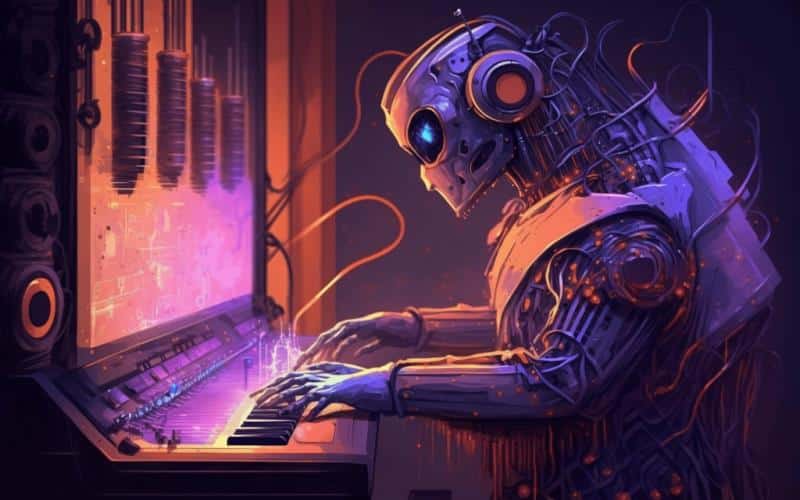

Thanks to inventions like the AI music maker, our creation and enjoyment of music is changing fast. As machine learning advances, artists, producers, and tech enthusiasts are exploring innovative ideas for creating unique and original compositions. The application of artificial intelligence in music production is not just a passing fad; rather, it’s a revolution that’s altering creativity and challenging established limits.
How Machine Learning Is Changing Music Composition
From rhythm patterns to melodic progressions, machine learning enables computers to evaluate vast volumes of musical data and learn how to create original compositions. Machine learning models learn by experience with many types, genres, and architectures, unlike conventional software. This enables an artificial intelligence music producer not only to copy musical genres but also to design entirely new arrangements that reflect the emotional depth and complexity of human-written music.
These systems can also assist with tasks such as harmonization, chord progressions, and even songwriting. This technology becomes a valuable creative tool for individual artists or aspiring producers without access to a full crew. It removes the entrance barrier and speeds up the creation of excellent music, making it more easily accessible.
Collaboration Between Human Creativity and AI
Although some worry that artificial intelligence will replace human musicians, the present trend favors cooperation above rivalry. Artists use machine learning algorithms to improve sound design, generate ideas, even remix current tracks. Combining human emotion with mechanical accuracy, this cooperative technique is stretching the creative possibilities.
A musician might start with an AI-generated beat, for instance, then layer real instruments or vocals to add their touch. The outcome is a hybrid track that gains from both emotional honesty and technical inventiveness. In the musical journey, the AI music maker transforms from a replacement to a co-creator.
Speeding Up the Production Process
The efficiency of machine learning in music production is one of its primary benefits. Once requiring days of experimentation and editing, today, one can accomplish this in a few hours. Quickly creating samples, suggesting tempo or style modifications, and even automatically mastering tracks for the best sound quality, artificial intelligence musicians can
This speed transforms commercial music production, gaming, film scoring, and advertisin,g in addition to helping single artists. Deadlines are tighter than ever, and the capacity to create quality music at scale may save both money and time.
Challenges and Ethical Considerations
Creating music with artificial intelligence presents certain challenges, despite its advantages. Constant arguments are around originality, copyright, and the emotional authenticity of AI-generated music. While some contend that emotionally impactful music devoid of a human narrative lacks soul, others contend that well-calibrated algorithms can still provide such an effect.
Furthermore, as more people rely on AI-generated content, it becomes increasingly necessary to establish explicit guidelines for royalties and authorship. Owner of a track produced by an artificial intelligence composer? The operator, the developer, or the machine itself? As the technology develops, these issues the sector has to answer.
A Harmonious Future Ahead
Looking forward, machine learning will undoubtedly continue to become increasingly important in the music sector. The instruments are becoming more exact, easy to use, and generally accessible. An r ai music maker can assist you to release creative potential and simplify your workflow regardless of your level of expertise—professional producer or just someone exploring at home. Although human creativity will always be central in music, artificial intelligence is proving to be a great collaborator in creating the soundtracks of the future.