


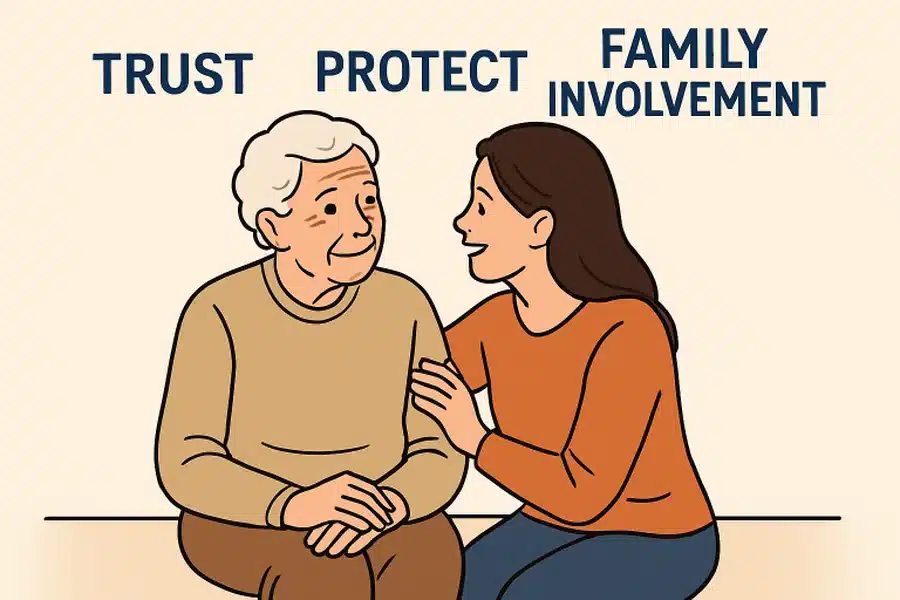
Every family and community must take responsibility for protecting their elderly members—and that means preparing to recognise the full scope of the issue, being aware of the signs, and taking immediate action when necessary. A number of recent accounts, along with an array of professional literature and the real-life stories of noted anti-elder abuse advocate Claudette Spinelli Schwartz, point to the incredibly significant and lasting impacts that elder abuse can have on both the individual and the entire family unit. By providing support and taking action against elder abuse via prevention, families have an invaluable opportunity to protect those in need, essentially being the first line of defence for the most at-risk older Americans.
Elder abuse is grossly under-reported, often concealed for a variety of reasons, including lack of awareness, fear, or isolation. By understanding the responsibilities associated with caring for an ageing family member, families can reduce the likelihood of elder abuse by addressing potential risks before they develop into more serious situations and giving comfort and support to their older relatives. Understanding that family members have a direct role in the prevention of elder abuse gives caregivers and families the ability to take action appropriately and compassionately to ensure that the dignity of every elderly individual is maintained and that their safety and welfare are assured.
Understanding the Types of Elder Abuse
Elder abuse can encompass five forms: physical, emotional, sexual, financial exploitation, and neglect; all of which can be committed by family members and caregivers and at times, by close friends of that person. The following are a list of common warning signs of elder abuse: unexplained bruises, sudden changes in personality, hygiene-related issues, or unusual financial activity; understanding of these warning signs can empower families and caregivers to stop elder abuse from taking place.
As reported by the World Health Organization (WHO), each year approximately one in every six persons who is sixty years old or older is subjected to elder abuse within their community. Families and communities must remain attentive to the issue of elder abuse because it is so widespread (WHO — Abuse of Older People).
Educating Family Members
Educating all family members on how to recognize the different forms of elder abuse as well as the signs of possible elder abuse is a protective measure against elder abuse. The U.S. Department of Health and Human Services has provided a comprehensive source of information and actionable items in its Elder Justice Initiative.
Education must occur on an ongoing basis and not just be a one-time event. Families should regularly discuss the latest scams, changes in local laws about protecting the elderly, and provide each other with articles and links to pertinent news stories.
Connecting Frequently
By regularly connecting with older adults, families create trust and the opportunity to spot potential abuse before it has a chance to escalate. Whether older adults live on their own or in an assisted living facility, families should make a point to connect at least once a month via a visit, phone call or video chat. When family members connect regularly with older adults, they will notice small shifts in their demeanor and/or habits that could indicate abuse, and therefore act accordingly.
Studies completed by AARP have demonstrated that older adults who receive regular contact with family members are much less likely to experience neglect or abuse. By maintaining these connections, family members provide a continuous level of protection from forming an environment for potential neglect or abuse.
Monitoring their Financial Activities
Many seniors are financially exploited in ways that lead to a loss of assets and a loss of sense of security. To assist older family members, relatives should help them manage their finances by monitoring large withdrawals by checking for any sudden changes in behavior or new friends who are involved in making financial decisions on behalf of the older adult. Using joint accounts or receiving alerts for suspicious activity can provide protection.
Families should regularly check with their older family members to discuss all aspects of their finances and to confirm that legal protections are in place (e.g., powers of attorney) to protect their future financial interests. It would also be useful for families to consult a financial advisor who works with seniors to provide a further layer of protection and oversight.
Providing Support to Caregivers
Not all elder abuse is perpetrated by children; in fact, many family caregivers or paid care providers are at a point of exhaustion and/or are lacking in support systems, which could cause them to make mistakes or be neglectful. As a result, caregivers need help. Family members can support caregivers by providing temporary relief for caregivers, accessing supportive counseling or stress relief programs, and regularly thanking caregivers for their service. As evidenced by the success of the COACH program, an established structure of caregiver support can reduce caregiver burnout and the risk of elder abuse.
Caregivers should be able to openly communicate with family members regarding their expectations, challenges, and concerns about caring for an older adult, which creates a supportive atmosphere for caregivers.
Utilizing Existing Community Resources
There are a variety of senior-focused community organizations, including adult protective services, senior centers, and legal aid organizations designed to protect older adults. These community organizations can provide supportive services such as home health checks, legal assistance, and socialization programs that create supportive environments for older adults who have been abused.
Community resources are especially important when family members live outside of their area or when family members are unable to visit an older adult on a regular basis. To find local resources for older adults, families can check with county or state health departments, or they can search for national community resources through the National Center on Elder Abuse.
Implementing Safety Measures
Physical safety and environmental safety measures can serve as an effective prevention strategy for older adults aged 65 and older. For example, older adults who live alone can enhance their home safety by using security systems, light around the entire property, installing a Medical Alert System, and providing a means for the response to emergency situations. These simple interventions can increase the feeling of safety and the speed of response to an emergency situation.
Families should routinely review the overall environment of their older family members and modify the family’s safety strategies based on the older person’s health and mobility changes as they get older.
Reporting Suspected Forms of Abuse
It is essential to respond quickly if you have reason to believe that someone is being abused. You can start an investigation and access additional services for an older adult by contacting local adult protective services, local law enforcement, or national organizations such as the National Center on Elder Abuse. You can file your complaint confidentially; you do not have to prove that an older adult has been abused, and if there are reasonable suspicions, then you can file your report and take action.
Promptly reporting abuse will not only protect the individual involved but will also help to prevent the occurrence of abuse in the future and will provide local authorities with a list of systemic issues associated with improper care for older adults.
When families remain alert, involved, and supportive of their older family members, they can create strong defensive systems around the older adult to prevent neglect and abuse — so that all older adults will enjoy safety, dignity, and peace as they get older.