


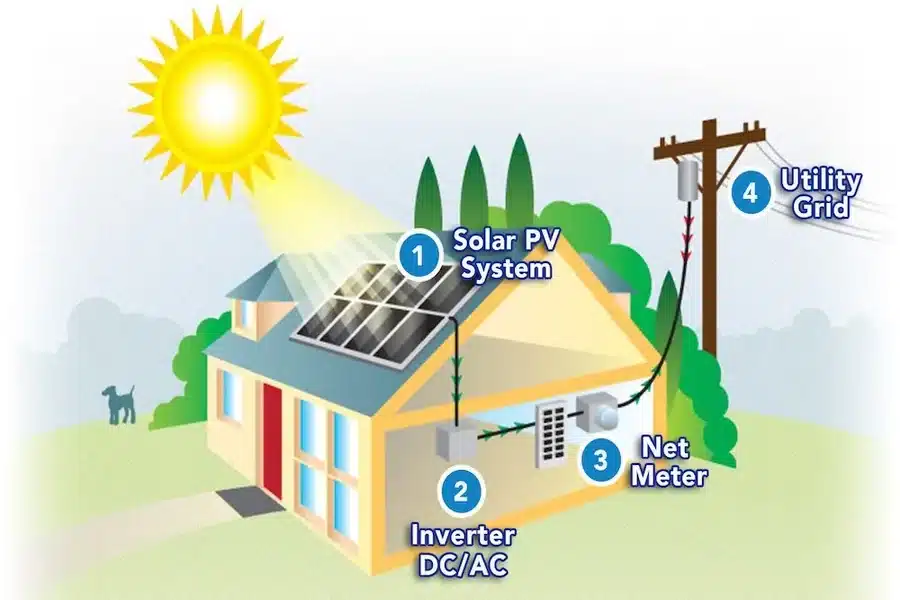
Do you also want to make the best use of the free natural energy? When you use solar power for your home, you capture it and store that energy for times when you might need it the most. A battery for home inverter is a tool that helps you to fulfil this venture. Here, what you have to do is just pair solar panels with a reliable battery system, and you can:
- Store excess power generated during sunny hours
- Use clean energy during nights or cloudy days
- Reduce dependence on the grid
- Cut electricity bills and enjoy energy independence
In short, a solar + battery system makes your home more efficient, self-sufficient, and future-ready. Let’s learn how you can benefit when using a battery for home inverter.
First, Understand a Solar Panel System
A home solar power system can be understood if you know its components and their respective roles in generating and handling electricity.
| Component | Function |
| Solar Panels | Collect sunlight and convert it into DC electricity |
| Charge Controller | Regulates voltage/current to prevent battery overcharging |
| Inverter | Converts DC into alternating current (AC) for household use |
| Battery for Home Inverter | Stores excess energy generated by solar panels for later use |
So, you see that each component contributes to running the solar system.
Why Do We Use Solar Inverter Batteries?
Solar inverter batteries help to store energy. They help you maximise the benefits of your solar system.
- Backup Power: Keep lights, fans, and appliances running even during power cuts.
- Energy Usage: Use less from the grid and rely more on self-generated solar power.
- Dark Hours’ Use: Tap into stored energy when solar panels are not producing power.
- Ecologically Sound: Lower your carbon footprint with a sustainable energy solution.
- Save Costs: Reduce electricity costs by avoiding high usage rates (like during evenings).
In short, these batteries act as your personal power reserve.
2 Common Types of Batteries in Solar Inverter Systems
Here are two commonly used options in home solar setups:
Lead-Acid Battery
- Technology: Uses lead plates and sulfuric acid to store energy.
- Pros:
- Budget-friendly
- Easy to source
- Good for short-term backup use
- Cons:
- Requires regular maintenance (like topping up with distilled water)
- Heavier and bulkier
- Shorter lifespan compared to lithium-ion
Lithium-Ion Battery
- Technology: Stores energy using lithium compounds and a rechargeable system.
- Pros:
- Long lifespan (up to 10 years or more)
- Maintenance-free
- Lightweight and compact
- Charges and discharges are handled efficiently
- Cons:
- Higher upfront cost
- Requires proper installation to manage heat and safety
Which one should you pick? Lithium-ion is a smart and long-term investment. Lead-acid works well for lower budgets and basic use.
How the Connection Works
Now that you know what’s inside a solar system, let’s break down how everything connects:
Solar Panels to Charge Controller
Connect the positive (+) and negative (-) terminals of the solar panel to the respective terminals present on the charge controller. The charge controller regulates voltage to ensure safe battery charging.
Charge Controller to Battery
Wire the battery for home inverter to the charge controller, again matching positive to positive and negative to negative. This allows the battery to charge safely and store excess solar energy.
Battery to Inverter
Connect the battery to the inverter. When you connect in this manner, the stored DC power is converted into usable AC power for your home. Keep the connections secure. If your system is over 2kW, use MCBs.
Voltage Configurations Explained
- 12V System: Suitable for small homes or low-energy use.
- 24V System: Mid-size homes or higher appliance usage.
- 48V System: Large homes or high-demand setups.
A thing to note: you need to connect several 12V batteries in series to generate the necessary power with respect to your inverter’s capability.
Benefits of Using Solar Panels, Inverters, and Batteries Together
1. Round-the-Clock Power Supply
- Solar panels generate electricity during the day.
- Inverters convert solar energy into usable power.
- Batteries store surplus energy for use at night or on cloudy days.
- Result: Continuous, uninterrupted power, even during outages.
2. Reduced Electricity Bills
- Lower dependency on the grid means smaller utility bills.
- Stored energy is useful during peak hours when electricity is expensive.
- Over time, these savings can add up to thousands of rupees (or dollars).
3. Net Metering Advantages
- In many places, you can sell excess power back to the grid.
- This can earn you credits or payments.
4. Greater Energy Independence
- Avoid price hikes and power cuts from utility providers.
- Control your own energy supply with a personalised setup.
5. Long-Term Financial Gains
- While the upfront cost is higher, solar systems pay off over time.
- Homeowners often regain their investment within 5–7 years.
- Increased property value: Homes with solar setups often sell faster and at higher prices.
Conclusion
So, now you know that a battery for home inverter is a very smart move. You get a backup, and if you combine it with a solar system, it helps you to:
- Use power when you need it
- Reduce grid reliance
- Save on bills
- Equip your home for power outages
No matter what you are aiming for, the first thing that you have to do is learn and understand how your inverter batteries will work with solar power. Aim for sustainability, or just lower your electricity bills. Both works!