


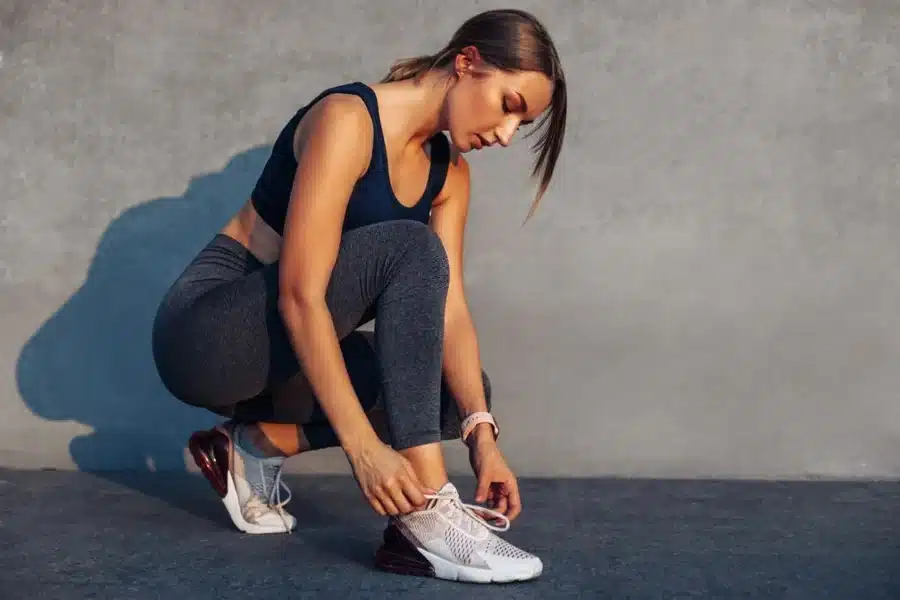
Your workout shoe does more than you think. It grips the floor when you lift, steadies you through a jump, and cushions each landing. The wrong pair throws off your form and tires you out early.
Picking well is not hard once you know what to look for. This guide covers the features that matter, how to match a shoe to your workout, and how to get the fit right.
What Should You Look for in a Gym Shoe?
A good gym shoe gives you a stable base, a grippy sole, and an upper that breathes. Those three decide how planted, safe, and cool you feel through a session. Everything else is a bonus.
A Stable, Flat Sole
Lifting and training need a firm base you can press into. A flatter, stable sole keeps your feet grounded as you squat, lift, or hold a plank, so your power goes into the movement rather than into wobble. A tall, soft running sole feels unsteady under heavy loads, so a training-focused sole is the safer pick for the weights floor. The lower the shoe sits, the more connected you feel to the ground beneath you.
A Grippy Outsole
Gym floors, mats, and studio surfaces can turn slick, especially once a session heats up. A rubber outsole with good traction keeps you steady during quick moves and side-to-side steps. Grip also supports your form, since a slipping foot pulls you out of position and wastes the effort you are putting in. On a busy gym floor, a sole that holds gives you the confidence to push a little harder.
A Breathable Upper
Training runs hot, and Indian gyms in summer even more so. A breathable knit or mesh upper lets air move through, so your feet stay cooler and drier through the session. If airflow matters to you, a breathable upper is worth prioritising, especially through the Indian summer.
How Do You Match Shoes to Your Workout?
The best gym shoe depends on what you do most. Lifting, HIIT, and cardio each ask for different things. Match the pair to your routine, and every session feels steadier.
Strength and Lifting
For squats, deadlifts, and heavy work, you want a flat, stable sole that lets you drive into the floor. Low cushioning helps here, since a soft heel wastes some of your push. A firm, grounded pair keeps your lift honest.
HIIT and Cardio
Circuits, jumps, and quick footwork need cushioning and side-to-side support at the same time. A lighter shoe with a bit of bounce eases landings and keeps up with fast changes of direction, so you stay light on your feet through a hard interval. For treadmill-heavy sessions, a pair of running shoes with more cushioning suits the forward motion better and takes the sting out of longer efforts.
Mixed and Cross-Training
If your week mixes weights, cardio, and classes, an all-rounder makes sense. A cross-training pair of sports shoes balances stability and cushioning, so one pair covers most of what you do. It is the practical choice when you would rather not swap shoes mid-week.
Studio and Court Sessions
Dance classes, aerobics, and indoor court games mean plenty of side-to-side movement on smooth floors. A non-marking outsole keeps the surface clean, and a light, flexible shoe lets you pivot and change direction with ease. Grip matters most here, since quick turns on a slick floor need a sole that holds its line. A stable pair also keeps your ankles steadier through fast footwork.
Here is a quick way to line up your main workout with the shoe that suits it:
| Workout | Sole and cushioning | What it helps |
| Strength and lifting | Flat, firm, low cushion | Stable base for heavy work |
| HIIT and circuits | Light, cushioned, flexible | Support for jumps and quick moves |
| Treadmill and cardio | Cushioned, forward flex | Comfort over longer sessions |
| Studio and court | Light, grippy, non-marking | Pivots and quick footwork |
| Mixed training | Balanced all-rounder | One pair for a varied week |
How Should a Gym Shoe Fit?
Fit decides comfort and safety more than any single feature. A shoe that slides or pinches works against you. Get the fit right before anything else.
Run through these checks before you buy:
- Toe room: about a thumb’s width at the front so your toes can spread on landings.
- Heel lock: snug at the heel with no lift as you move.
- Width: your foot should sit flat without spilling over the sole.
- Size: match your foot to a UK size chart, and get your size right before you order.
Your shoes also shape how your body carries a workout. A supportive pair helps your posture and eases the load on your joints through a long session on the gym floor. Strength work is worth the effort too, and a stable, well-fitting shoe keeps those training days steadier from the first set to the last. If you plan to buy premium gym shoes online, the same fit rules apply, so measure your foot first and check the size chart before you order. A quick measure now saves a return later.
Train Better in the Right Pair
The right gym shoe is the one that matches your workout and fits your foot. A stable sole for lifting, cushioning for cardio, grip for both, and a fit that locks your heel. Nail those and your sessions feel steadier from the first rep.
Value belongs in the gym too. A durable pair built for daily training and Indian weather earns its place session after session, not just for a week.
Ready to kit up? Buy premium gym shoes online at Asian Footwears. Check your pincode for 60-minute Asian Flash delivery, and count on Free Delivery with Hassle-Free Returns on every order.
Shop Now and become an AsianRider.
FAQs
Can I use running shoes for gym workouts?
For treadmill and cardio, yes. For lifting, a flatter and more stable sole is better, since running shoes have a tall, soft heel that feels wobbly under heavy loads.
What shoes are best for weight training?
Look for a flat, firm sole with low cushioning and a grippy outsole. This gives you a stable base to press into the floor during squats, deadlifts, and other heavy lifts.
Are cross-training shoes worth it?
Yes, if your week mixes weights, cardio, and classes. A cross-training pair balances stability and cushioning, so one shoe handles most of your gym routine.
How should gym shoes fit?
Snug at the heel with about a thumb’s width of toe room and no pinching at the sides. Your heel should not lift as you move. Match your foot to a UK size chart.
Can I buy gym shoes online?
Yes. Measure your foot at home, check the size chart, and confirm the return policy. Buying gym shoes online is easy when a size swap is simple.
How often should I replace gym shoes?
Replace them once the sole grip fades or the cushioning feels flat, usually after several months of regular training. Worn shoes lose the stability you rely on.