

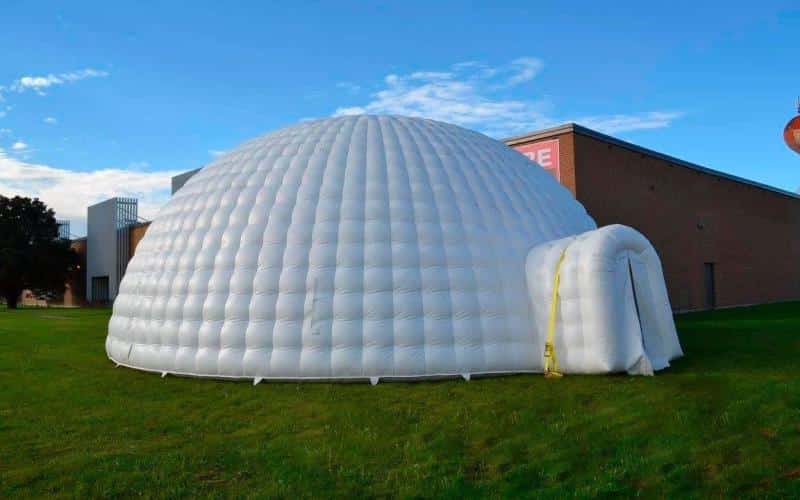

Have you ever wondered about the engineering wizardry behind inflatable domes? These unique structures, often seen at festivals, sports events, and promotional activities, pique the curiosity of many due to their flexible yet robust nature. As simple as these inflatables may seem on the surface, there’s a fascinating blend of science, design, and engineering that goes into their creation.
Mechanism of Inflation
The fundamental principle behind inflatable domes is air pressure. To understand this, recall how a balloon works: when you inflate it, the air inside pushes against the flexible material, causing it to expand. The dome structures are pumped with air, resulting in internal pressure. The outer material resists this pressure, maintaining the rigid structure we observe.
Strength and Stability
You might be wondering about the strength and durability of these inflatable domes. A basic principle of engineering explains this durability – the geometric accuracy of the dome. The dome shape in structures, like those used in ancient Roman architecture, is renowned for its remarkable stability and balance of forces.
In inflatable domes, the pressurized air uniformly distributes the structural loads across the fabric surface, making the dome strong and stable. In addition, these structures are designed to withstand environmental factors such as wind load, making them suitable for outdoor use.
Choice of Materials
Material selection is critical to the engineering of inflatable domes. The material needs to be durable, lightweight, and flexible. It should also be resistant to weather elements and easy to clean and maintain. Synthetic materials like PVC and nylon are popular choices given their durability and lightness.
Moreover, welding or stitching together the pieces of material is a delicate task that requires an understanding of tensile forces. A well-fabricated dome should have tight, well-sealed seams to hold the pressurized air within, ensuring maximum strength and stability.
Structural Design and Setup
Designing an inflatable dome is a meticulous task. The structure must be designed to maintain stability, even as it expands with the volume of air pumped into it. The structure requires anchorage to keep it rooted in place, usually achieved by the use of weights or stakes.
In terms of setup, inflatable domes need an air blower to get inflated, and this air blower usually stays operational to maintain the necessary air pressure. To deflate the structure, the air blower is turned off, allowing for the slow release of air.
Conclusion
The engineering behind inflatable domes is an amazing blend of basic physics principles, material expertise, and careful design. These structures serve a variety of functions, providing temporary and efficient solutions for a range of needs. Whether seen in an event site or as an architectural marvel, inflatable domes are a testament to human ingenuity and the power of engineering.