

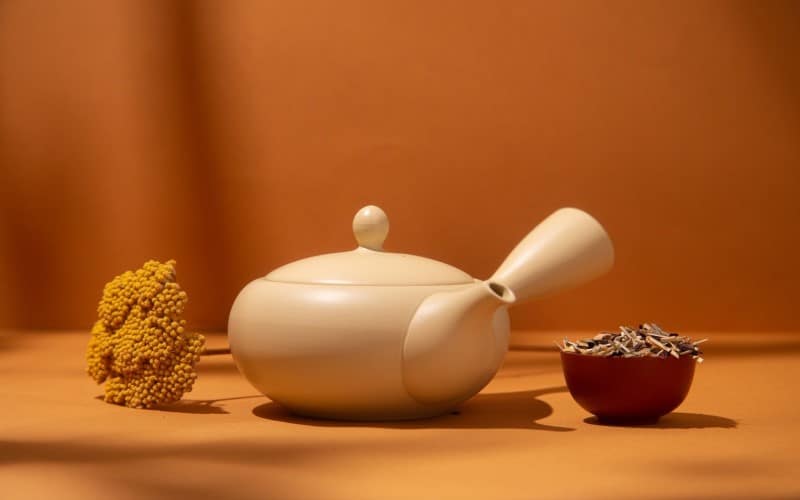

Discover the art of Japanese teaware. From Kyusu to Matcha, explore the elegance of Japanese tea culture and pottery.
Exploring Japanese Teaware
History of Japanese Tea Culture
Japanese tea rituals hit the scene way back in the 9th century, but it wasn’t until the 13th and 14th centuries that the famous tea ceremony began to take shape. This ceremony, known for its laser-like focus on precision and simplicity, became a cornerstone of their culture.
A big game-changer was Nagatani Sōen’s invention of sencha in 1737. As an Uji tea enthusiast, Sōen’s method of steaming, rolling, and drying tea leaves gave us sencha, characterised by its bright green hue and fresh flavour. Fast forward to today, sencha remains a crowd favourite, making up a whopping 80% of Japan’s yearly tea production.
Then, there’s matcha, the granddaddy of Japanese teas, which has been a game-changer in its own right. Its popularity drove the creation of unique Japanese teaware like the Matchawan (Matcha bowl), Chasen (bamboo whisk), and Chashaku (bamboo scoop), all stars of the traditional tea ceremony.
Evolution of Japanese Teapots
Japanese teapots, or Kyusu, have come a long way and are known for both their practicality and looks. They mainly come in two designs: Yokode Kyusu, with a handy side handle, and Ushirode Kyusu, sporting a handle at the back.
Crafted from ceramic, many Kyusu teapots include a nifty strainer at the spout to catch tea leaves – kind of like a bouncer, making sure only tea gets into your cup. Whether it’s a detachable stainless steel mesh or part of the pot, it does the job.
Beyond Kyusu, Japan has no shortage of cool teapots and tools, all reflecting the local traditions. Tetsubin, for instance, iron kettles known for holding heat perfectly, are treasured for boiling water for tea.
All this diverse teaware isn’t just about having pretty things. It hints at the deep-rooted love for tea within Japanese culture, with each piece telling tales of its origins and the expert hands behind its creation.
| Type of Tea | Description | Popularity (%) |
| Sencha | Steamed, rolled, and dried tea leaves; bright green and fresh-tasting | 80 |
| Matcha | Powdered tea, often used in tea ceremonies | Popular, yet not as much as Sencha |
Learning about the evolution of Japanese teaware is about more than drinking tea. It’s a way to celebrate the skill and time-honoured traditions that continue to flourish in modern times.
Types of Japanese Teapots
Whether you’re a matcha aficionado or just dabbling your toes into the world of Japanese tea, the right teapot can make all the difference in taste and tradition. Each teapot style has its own flair and purpose. Dive into the charm of Kyusu, Houhin, and Shiboridashi teapots and see which one might suit your tea needs.
Kyusu Teapots
When folks mention Japanese teapots, Kyusu is usually the star of the show. With its sideways handle, these teapots make pouring a breeze—just a flick of the wrist and you’ve nailed it. The built-in ceramic or metal filter works like a charm, keeping those pesky leaves from sneaking into your cup while serving up your brew cleanly.
Features of Kyusu Teapots:
- Side handle: Makes for smooth, one-handed pouring.
- Filter: Comes with ceramic or steel mesh to keep leaves at bay.
- Capacity: Typically ranges from 200ml to 400ml.
| Feature | Description |
| Handle | Side handle for hassle-free pouring |
| Filter | Ceramic or steel mesh |
| Capacity | 200ml to 400ml |
Houhin Teapots
For those special occasions with top-shelf Japanese teas like gyokuro and kabusecha, Houhin pots are your go-to. Handle-less by design (don’t worry, the tea’s cool enough), they let you savour the full umami of your brew. With their wider holes, these pots allow all that rich flavour to shine through, perfect for those moments when you want every sip packed with aroma.
Features of Houhin Teapots:
- No handle: Safe to hold while brewing the tea.
- Filter: Larger holes to let more taste through.
- Capacity: Keeps it cozy with less than 200ml.
| Feature | Description |
| Handle | None |
| Filter | Larger holes for flavourful brews |
| Capacity | Under 200ml |
Shiboridashi Teapots
When it’s time to bring out the big guns for gyokuro, Shiboridashi teapots get the job done—despite their petite size! These flat teapots might be tiny (sometimes less than 100ml), but they carry a punch. No filter here; the clever lid-and-body design does all the leaf-sifting work, so every drop is pure essence.
Features of Shiboridashi Teapots:
- Flat design: Ensures each leaf is steeped to perfection.
- No filter: The lid gap handles the leaf work.
- Capacity: Teeny-tiny, under 100ml.
| Feature | Description |
| Handle | None |
| Filter | Skip the filter; uses lid |
| Capacity | Under 100ml |
Grasping these choices can help any tea lover pick the best pot for the perfect pour. Experience the nuances of Japanese tea like never before and pick a favourite that elevates your ritual.
Specialized Japanese Teaware
Dive into Japanese teaware, and you’ll unearth some specially crafted items that bring tea perfection and a touch of joy to the ritual. Here, we’re spotlighting tools of the Matcha trade and pottery traditions that are the heart and soul of Japanese tea culture.
Matcha Utensils
Matcha, Japan’s ancient tea gem, has inspired unique utensils fitted just for its vibrant ritual. These tools, hailing from the 15th-16th century, have their personalities and craftsmanship, distinct from their Chinese origins.
Matcha Must-Haves:
- Matchawan (Matcha Bowl): Your Mix-and-Sip buddy. Shaped in various sizes, this bowl caters to both your Matcha mood and method.
- Chasen (Bamboo Whisk): Hand-sculpted from bamboo, this whisk is your ticket to frothy green heaven. Crafting its delicate prongs is no quick dance—think months of dedication!
- Chashaku (Bamboo Scoop): The accuracy maestro of Matcha—sizing up powder like nobody’s business.
- Usuki (Tea Caddy): The sparkly jar for your Matcha, often a work of art itself, blending beauty and usefulness.
- Chaire (Clay Caddy for Koicha): The thicker Matcha’s best mate, traditionally fashioned from clay for that rich, earth-touch holding.
- Tetsubin (Iron Kettle): Brings the water to boil with a dash of tradition, making your Matcha time feel Zen and genuine.
| Utensil | Material | Use |
| Matchawan | Ceramic | For mixing and sipping Matcha |
| Chasen | Bamboo | Whipping up that green foam |
| Chashaku | Bamboo | Scooping the perfect powder amount |
| Usuki | Various | Matcha holder |
| Chaire | Clay | Holds Koicha |
| Tetsubin | Iron | Heats water for your tea ceremony |
Regional Pottery Styles
The pottery of Japan is as varied as its scenery, with each region stitching its personality into teaware craftsmanship.
Regional Pottery Gems:
- Takayama, Nara: They jazz it up with bamboo tea tools like Chasen and Chashaku. The patience and precision in these crafts are something to admire.
- Kyoto: Metal magic happens here with Tetsubin and other iron pieces. Known for designs that are as hearty as they are pretty.
- Arita, Saga: You’ve got porcelain with hues and motifs inspired by nature; Arita ware is your go-to for lively and traditional aesthetics.
- Shigaraki, Shiga: Shigaraki ware shows its rustic charms with how it embraces natural ash glazes to raw textures, making each piece own its story.
- Seto, Aichi: Smoothing it out with glaze mastery; Seto ware comes from one of Japan’s six oldest kilns, presenting simple sophisticated styles.
| Region | Specialty | Description |
| Takayama, Nara | Bamboo tea tools | Art in every carved detail |
| Kyoto | Metal teaware like Tetsubin | Strong and artistically designed |
| Arita, Saga | Porcelain | Bold colours and nature patterns |
| Shigaraki, Shiga | Shigaraki ware | Rough-hewn with ash glaze beauty |
| Seto, Aichi | Seto ware | Refined and understated glazework |
Take a sip of Japanese teaware magic—it’s a lush blend of culture, art, and practicality, ensuring your tea time is as elegant as it is delightful.
Tea Culture Beyond Teaware
Health Benefits of Silver Tips Tea
Silver Tips Tea isn’t just your regular cup of brew. This posh white tea is made from the youngest, softest buds of the Camellia Sinensis plant, all the way from the lofty Himalayan landscapes of Nepal. With its sweet symphony of pine, honey, and orchid notes, and only a dollop of caffeine, it’s all about flavour and finesse.
This rare gem in the tea world doesn’t just tickle your taste buds; it’s a health hero, too:
- Boosting Immunity: Packed with antioxidants, Silver Tips Tea gives your immune system a real leg-up.
- Weight Watching: Natural compounds in the tea chip in by torching some fat and ramping up your metabolism.
- Tummy Friendly: It’s gentle on the stomach and boosts your gut health.
- Heart’s Best Friend: Say goodbye to extra cholesterol; your heart will thank you.
- Keeps Sugar in Check: Helps keep blood sugar levels in line, giving you an ally in diabetes management.
| Health Benefit | How It Helps |
| Boosting Immunity | Loads of antioxidants to pep up your immune system |
| Weight Watching | Helps burn fat and gives metabolism a push |
| Tummy Friendly | Calms the stomach, good for gut vibes |
| Heart’s Best Friend | Cuts down cholesterol, giving your heart a break |
| Keeps Sugar in Check | Aids in controlling blood sugar levels |
Production of Silver Tips Tea
Calling this a ‘process’ is kinda underselling it. Silver Tips Tea is something special, scooped from the high-up Himalayan spots in Nepal, and it’s made with a diligence that borders on art:
- Plucking: Start with handpicking those teeny unopened buds, no shortcuts here!
- Solar Withering: Lay them out basking in the sun to stop oxidation, keeping the taste fresh and the vitamins intact.
- Sorting: Finally, it’s like quality control on steroids – only the crème de la crème makes it through.
This gentle, age-old process gives you a cup that’s packed with soft, sweet whispers of flavour and cultural richness.
| Production Stage | What Happens |
| Plucking | Handpicking the youngest tea buds |
| Solar Withering | Sunlight dries the buds to lock in quality |
| Sorting | Deletes all the extras, leaving primo tea only |
Knowing all that goes into Silver Tips Tea makes every sip an experience, blending delicious tastes with a healthful heritage.