


High-Performance Liquid Chromatography (HPLC) is a powerful technique used in laboratories to separate, identify, and quantify components in a mixture. At the heart of this method lies the HPLC column — a crucial component that directly impacts the efficiency and accuracy of the analysis. When selecting the right equipment for HPLC, opting for high quality HPLC columns is essential for achieving reliable results. For those new to HPLC, understanding how these columns work and how to choose the right one is essential.
What is an HPLC Column?
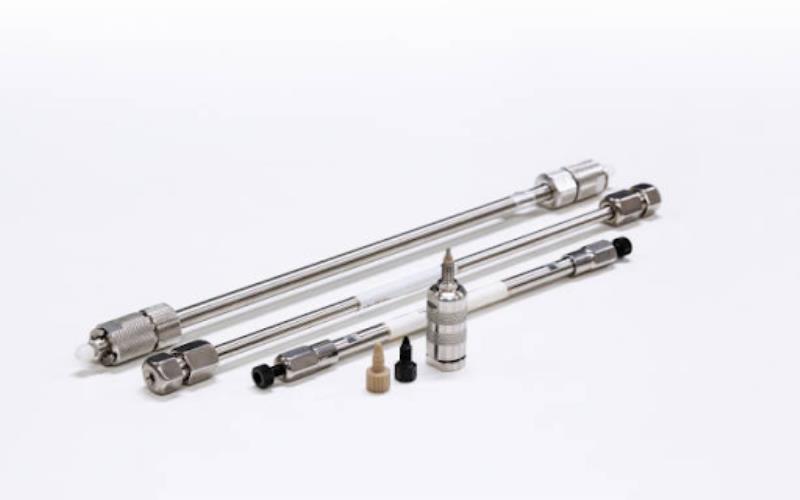
An HPLC column is a stainless-steel tube packed with a stationary phase, usually consisting of small porous particles. As a liquid sample passes through the column under high pressure, the different components of the sample interact with the stationary phase at varying degrees, causing them to separate. The separated components then exit the column at different times, allowing for individual analysis.
HPLC columns come in various sizes and types, each designed for specific applications. The most common types include reversed-phase, normal-phase, ion-exchange, and size-exclusion columns, each serving a unique purpose depending on the chemical nature of the sample.
How Do HPLC Columns Work?
The basic principle behind HPLC column operation relies on the interactions between the sample components, the mobile phase (solvent), and the stationary phase. As the mobile phase carries the sample through the column, components with a higher affinity for the stationary phase move more slowly, while those with a higher affinity for the mobile phase move faster. This difference in movement causes the separation of individual components.
The retention time — the time it takes for a particular component to pass through the column — is a key factor in identifying substances. The retention time depends on factors such as the column’s length, particle size of the stationary phase, and the composition of the mobile phase.
Types of HPLC Columns
- Reversed-Phase Columns: These are the most widely used HPLC columns, where the stationary phase is nonpolar (hydrophobic) and the mobile phase is polar. They are ideal for separating compounds based on hydrophobic interactions, commonly used for pharmaceuticals, food samples, and environmental analysis.
- Normal-Phase Columns: In this setup, the stationary phase is polar, and the mobile phase is nonpolar. It’s suitable for separating polar compounds, such as sugars and certain pharmaceuticals.
- Ion-Exchange Columns: These columns separate ions and polar molecules by their charge. They are useful in protein analysis, water quality testing, and other biological applications.
- Size-Exclusion Columns: Also known as gel filtration columns, they separate molecules based on size. Larger molecules elute first, while smaller ones take longer to pass through the column. These are often used for analyzing polymers and biological macromolecules.
Choosing the Right HPLC Column
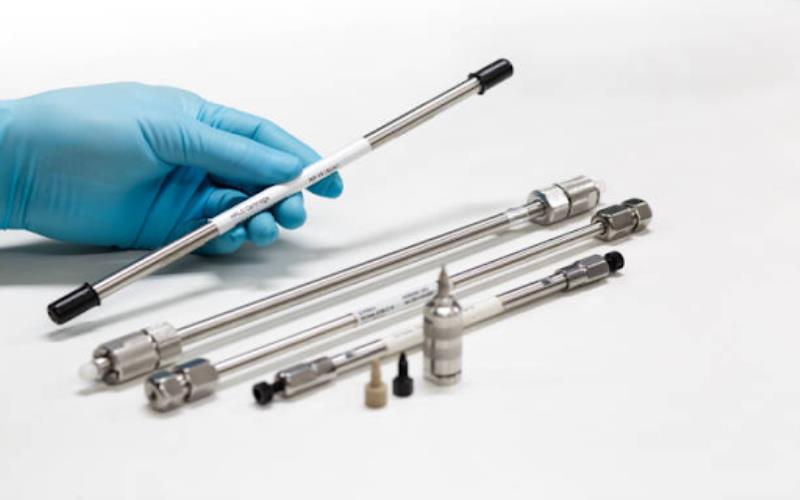
Selecting the right HPLC column depends on the nature of your sample and your analysis goals. Consider the following factors when choosing a column:
- Sample Composition: Determine whether your sample is polar or nonpolar, which will guide you in choosing between reversed-phase or normal-phase columns.
- Particle Size: Smaller particles (e.g., 1.7 μm) provide higher resolution but require higher pressure, while larger particles (e.g., 5 μm) offer lower resolution but are easier to work with.
- Column Dimensions: The length and internal diameter of the column affect separation efficiency and run time. Shorter columns allow faster analysis, while longer ones provide better separation.
- pH Stability: Ensure the column can withstand the pH range of your mobile phase to prevent column damage and ensure consistent performance.
Maintaining Your HPLC Column
Proper maintenance prolongs the lifespan of your HPLC column and ensures accurate results. Always filter your samples and mobile phases to prevent particle buildup. Store columns in appropriate solvents when not in use, and flush them with compatible solvents after each run. Monitoring pressure changes can also help detect blockages early, allowing you to address issues before they compromise your results.
Conclusion: Mastering the Basics
Understanding HPLC columns is fundamental for anyone working with liquid chromatography. From choosing the right type to maintaining its performance, mastering these basics ensures more accurate and reliable results in the lab. Whether you’re analysing pharmaceuticals, food products, or environmental samples, the right HPLC column can make all the difference in your scientific work.